Film Macro Photography Collection: 10 Microscopic Perspectives from Insects to Everyday Objects
For film photography enthusiasts, macro photography is a journey that completely subverts everyday visual experience. It invites us to point our lenses at scale
Introduction: Gazing into the Microscopic Universe Around Us
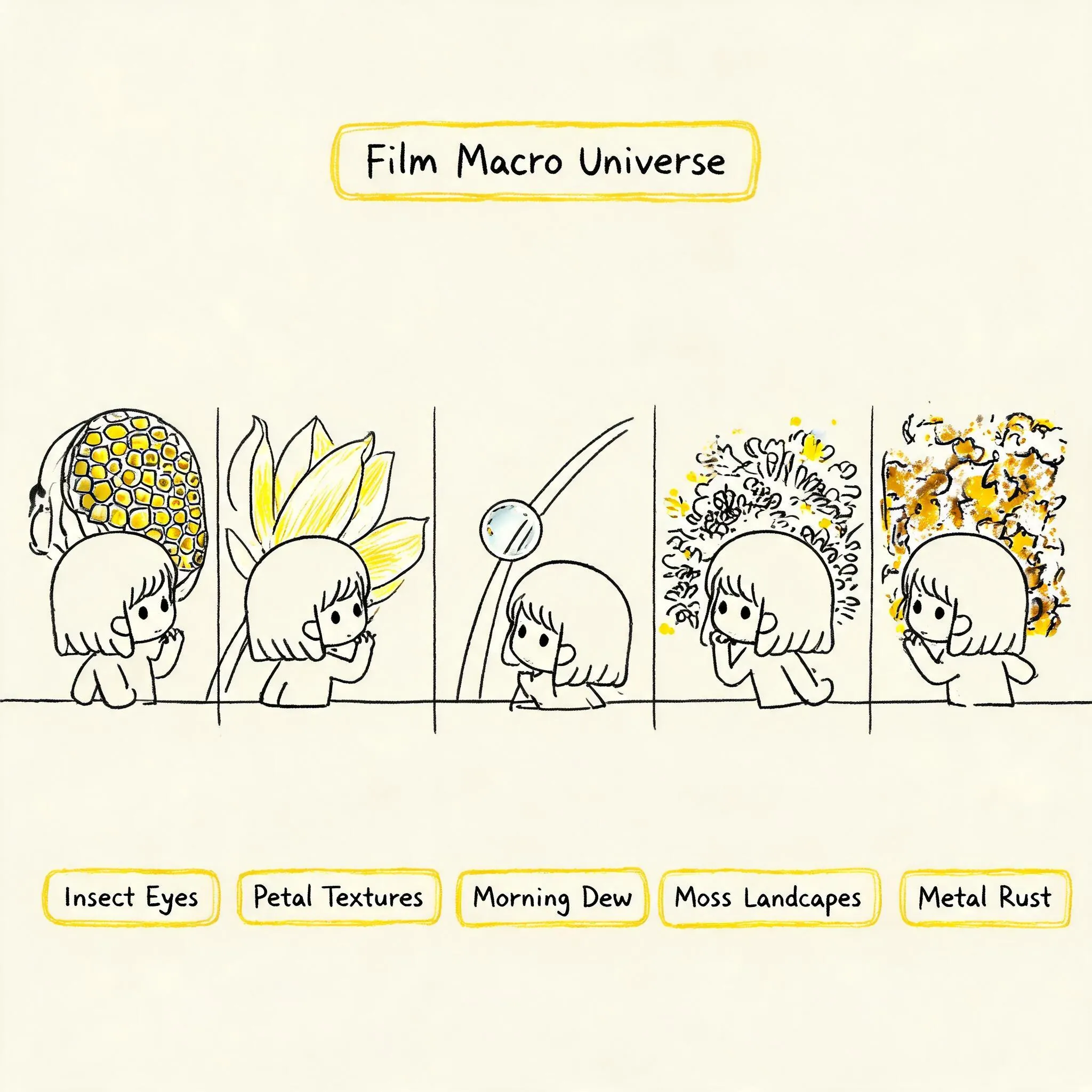
For film photography enthusiasts, macro photography is a journey that completely subverts everyday visual experience. It invites us to point our lenses at scales overlooked by the naked eye—the path of a leaf vein, the refraction of a morning dewdrop, the rust of time on old metal. This is not merely a technical challenge but a transformation in the way we see. Film, with its unique grain texture, color transitions, and unpredictable chemical reactions, adds a distinct poetic and material quality to this microscopic exploration. This collection is not a technical tutorial but a pure visual inspiration library. Through ten carefully curated macro perspective themes, we will showcase the unique aesthetic world film can present when capturing extreme close-up details, aiming to inspire you to pick up your camera and discover and document the accessible microscopic universe around you.
I. Natural Microcosm: The Delicate Structures of Life
Nature is an inexhaustible treasure trove for macro photography. Under film’s interpretation, the details of these tiny lives and structures gain new texture and emotion.
1. Insect Compound Eyes: A Labyrinth of Geometry and Color
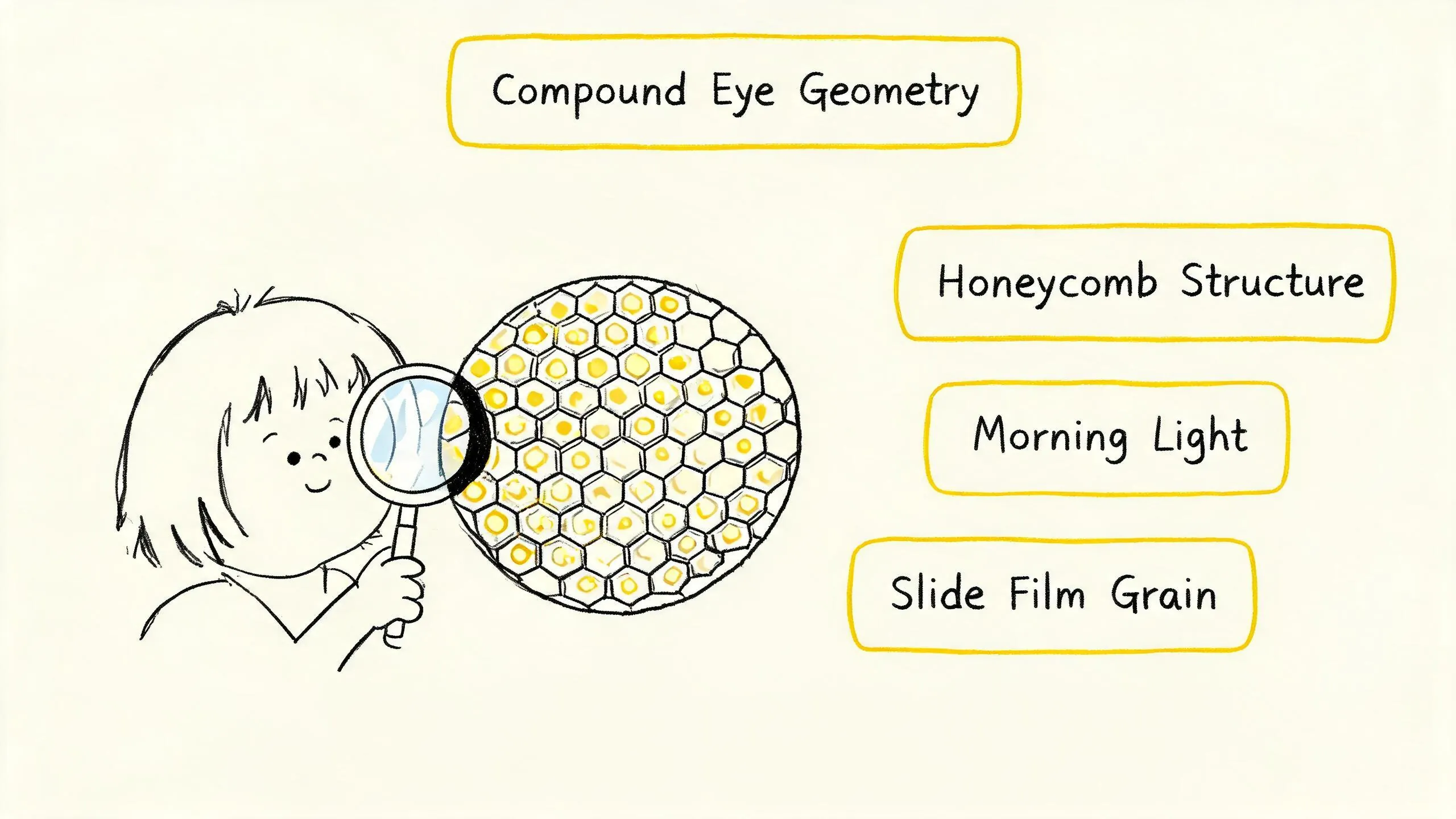
Insect compound eyes are among nature’s most intricate structures. Under a macro lens, the honeycomb structure composed of countless ommatidia reveals astonishing geometric beauty, with surface luster and color particularly captivating under sidelight. The best time to shoot insect macros is often early morning, when cold-blooded insects are sluggish due to lower temperatures, providing photographers with precious time for composition and focusing . Film, especially fine-grained slide film, can render the complex structure and subtle color transitions of compound eyes with a naturalness that digital sensors sometimes struggle to match, highlighting an “organic feel.”
2. Petal Textures: Stained Glass of Light
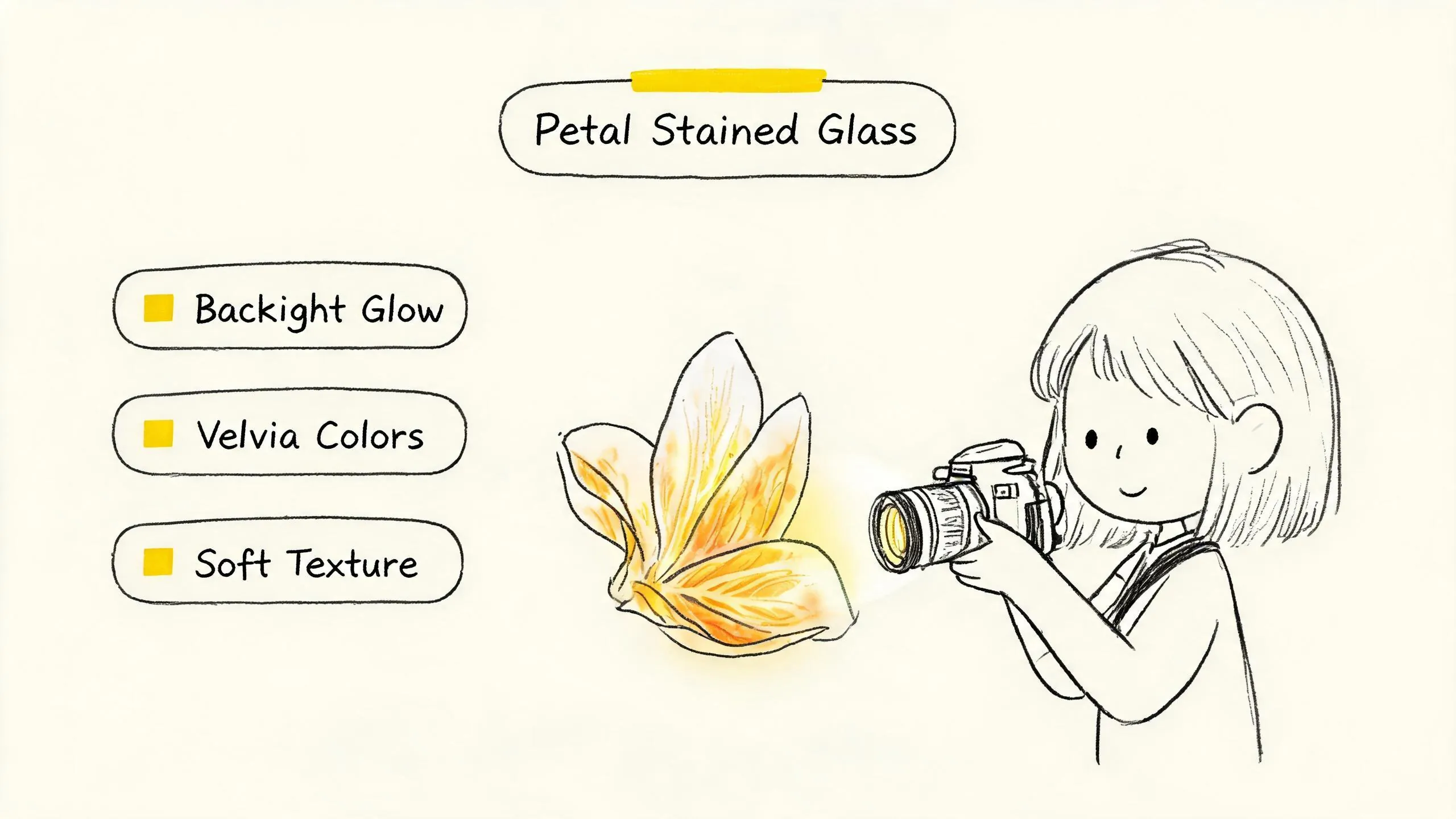
When a macro lens approaches petals, especially in backlight, light penetrating the semi-transparent petal tissue creates a stunning effect reminiscent of stained glass . The fine structures of the stamen—slender filaments, pollen-covered anthers—take on a soft, vibrant texture on film. Using high-saturation color slide film, like Fuji Velvia 50, can push this color vibrancy and purity to the extreme .
3. Morning Dew Condensation: Natural Magnifying Glasses
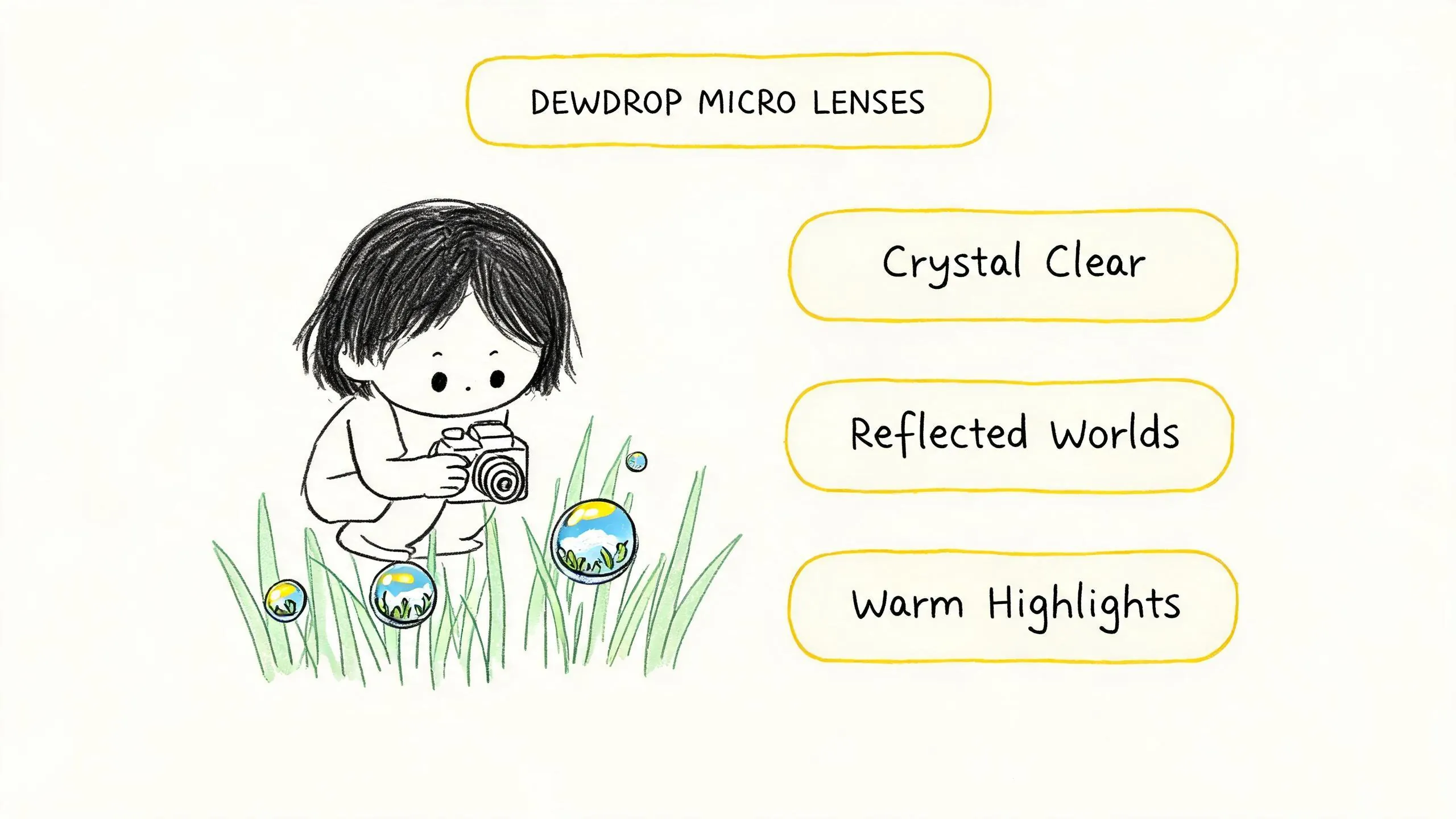
Dewdrops clinging to petals or grass blades act as natural micro-lenses. They are not only crystal clear themselves but also refract and reflect surrounding environments, creating a picture-within-a-picture effect . To actively create this effect, a simple spray bottle can simulate the ambiance of morning dew. The highlights and shadow transitions of water droplets recorded on film often carry a warm, lustrous quality.
4. Moss Landscapes: A Preview of Alien Terrain
An ordinary patch of moss, under a macro perspective, transforms into undulating “green mountains” and “primeval forests” . Its complex textures, varying shades of green, and tiny water droplets or dust particles collectively compose an abstract painting full of life details. Using medium format film for such subjects, with its rich detail capacity and unique tonal range, further enhances the grandeur of this “miniature landscape.”
II. Man-Made Microcosm: Traces of Time and Material Texture
Man-made objects under macro shed their functional facade, revealing the stories and beauty of the materials themselves—an aesthetic of “tactile surfaces” .
5. Metal Rust: Abstract Paintings of Time
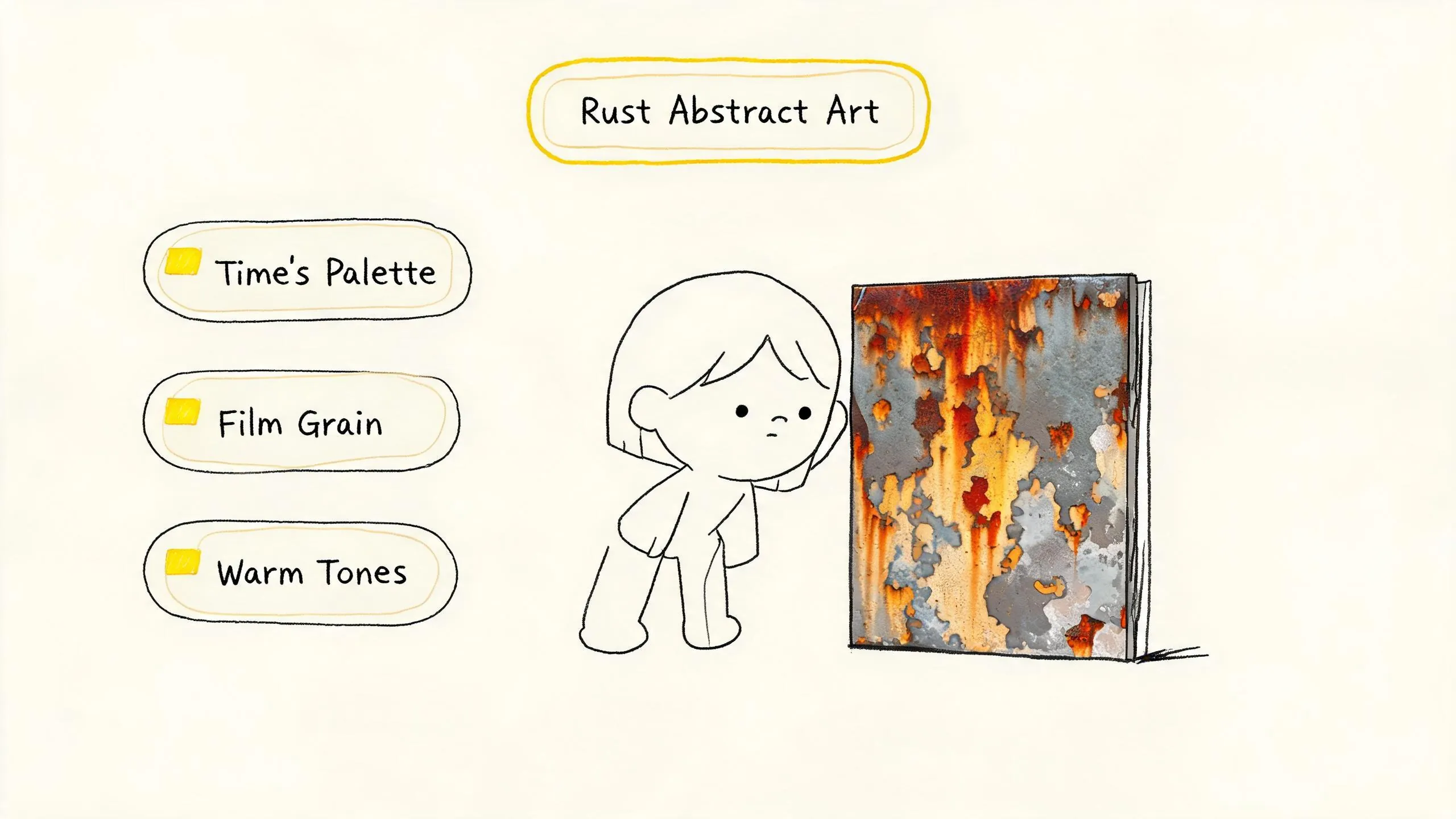
Rusted metal surfaces are treasure troves of color and texture. The ochre reds, oranges, and yellows of rust interweave with the metal’s original color, forming textures akin to abstract expressionist paintings under macro. Film’s grain and unique interpretation of warm tones can enhance the rust’s sense of age and materiality, making the passage of time visible.
6. Old Book Page Fibers: The Tactility of Civilization
The edges of old book pages, with fibers frayed and layered from repeated handling, become codes recording time and reading traces under a macro lens—fiber arrangement, paper texture, even residual ink marks. Sidelight can beautifully outline these subtle undulations, enhancing the image’s three-dimensionality and tactile quality .
7. Fabric Warp and Weft: The Rhythm of Order and Variation
Whether thick towels, delicate napkins, or synthetic fabrics, their woven structures reveal astonishing order and detail under macro . Sidelight can enhance the three-dimensionality of warp and weft threads, while backlight can penetrate thin fabrics, showcasing their translucency and fiber structure. When film records these repetitive textures, its inherent grain can interact interestingly with the fabric patterns, avoiding an overly mechanical look.
8. Ceramic Glaze Cracks: Accidental Ice Crackle Patterns
The crackle glaze (ice crack patterns) on ceramic surfaces results from the combined effects of craftsmanship and time. These irregular crack networks are highly decorative and abstractly beautiful under macro. Film, especially color negative film, with its latitude, can preserve rich layers when recording these delicate cracks and glaze color gradients, presenting a warm, jade-like texture.
III. Creative Macro: Visual Experiments Beyond Convention
Macro is not just about recording but creating. Leveraging film’s characteristics and unconventional techniques can explore more abstract and subjective visual expressions.
9. Abstract Light and Shadow with Multiple Exposures
Pointing a macro lens at the local light and shadow of everyday objects—like curtain folds or water reflections—can yield completely abstract lines and color blocks. Further, using a film camera’s multiple exposure function to overlay different micro textures can create dreamlike composite images. Slide films like Fuji Provia 100F support multiple exposures, and their color characteristics enrich the layered effects after overlay . The unpredictable overlapping effects in film photography are inherently full of surprises.
10. Film Texture Itself: The Poetry of Grain and Expiration
The ultimate charm of film macro may lie in the “film look” itself. Fine or coarse grain, unique color saturation, and tonal transitions—these characteristics are accentuated under macro’s magnification, becoming part of the image’s aesthetic . Using expired film for macro creation introduces another uncontrollable variable: fading, color shifts, increased grain or haze. These “defects” can instead become sources of a work’s unique atmosphere, as explored by artist Alison Rossiter using expired photographic paper .
IV. Macro Portrait Details: Amplified Emotional Nuances
Macro portraiture doesn’t capture the entire face but focuses on highly expressive局部, revealing detail layers usually overlooked by the naked eye.
11. Eye Iris: The Microscopic Universe of the Soul
The iris of the eye possesses unique textures and colors, its structure under macro resembling a complex nebula or topographic map. Focusing must be absolutely precise on the iris, often requiring manual focus . Film, especially portrait negative film, can softly handle the transition between skin and iris, imbuing the image with a delicate emotional warmth.
12. Lip Textures and Hand Details
The skin texture of lips, fine lip lines, and the joint wrinkles and skin texture of hands are details carrying stories and emotions. Macro shooting of these局部 can create images with great intimacy and tactility. Control of focus and depth of field is crucial here to ensure key details are sharp while the background remains soft .
V. Macro Landscapes: Miniaturizing the Earth
Applying landscape photography thinking to macro transforms ordinary natural surfaces into magnificent “miniature landscapes.”
13. Rock Surfaces and Sand Dune Undulations
A rock’s surface under macro might be a canyon, mountain range, or wasteland. Sand dune undulations resemble aerial views of deserts. Backlight or side-backlight can greatly enhance these surfaces’ textures and three-dimensionality. Film, especially black-and-white film, can abstract this sense of terrain through contrast, emphasizing form and structure.
14. Water Surface Ripples and Tree Bark Cracks
Subtle ripples on calm water become flowing abstract lines under macro. Deep cracks in old tree bark resemble the parched lips of the earth. These subjects are well-suited to film for expressing their texture. For example, using natural-color, smooth-toned slide film like Fuji Provia 100F can beautifully reproduce the delicate transitions of water ripples . The core of macro landscapes lies in discovering visual associations between “miniature” and “grand” .
Conclusion: Beyond Tools, a Revolution in Seeing
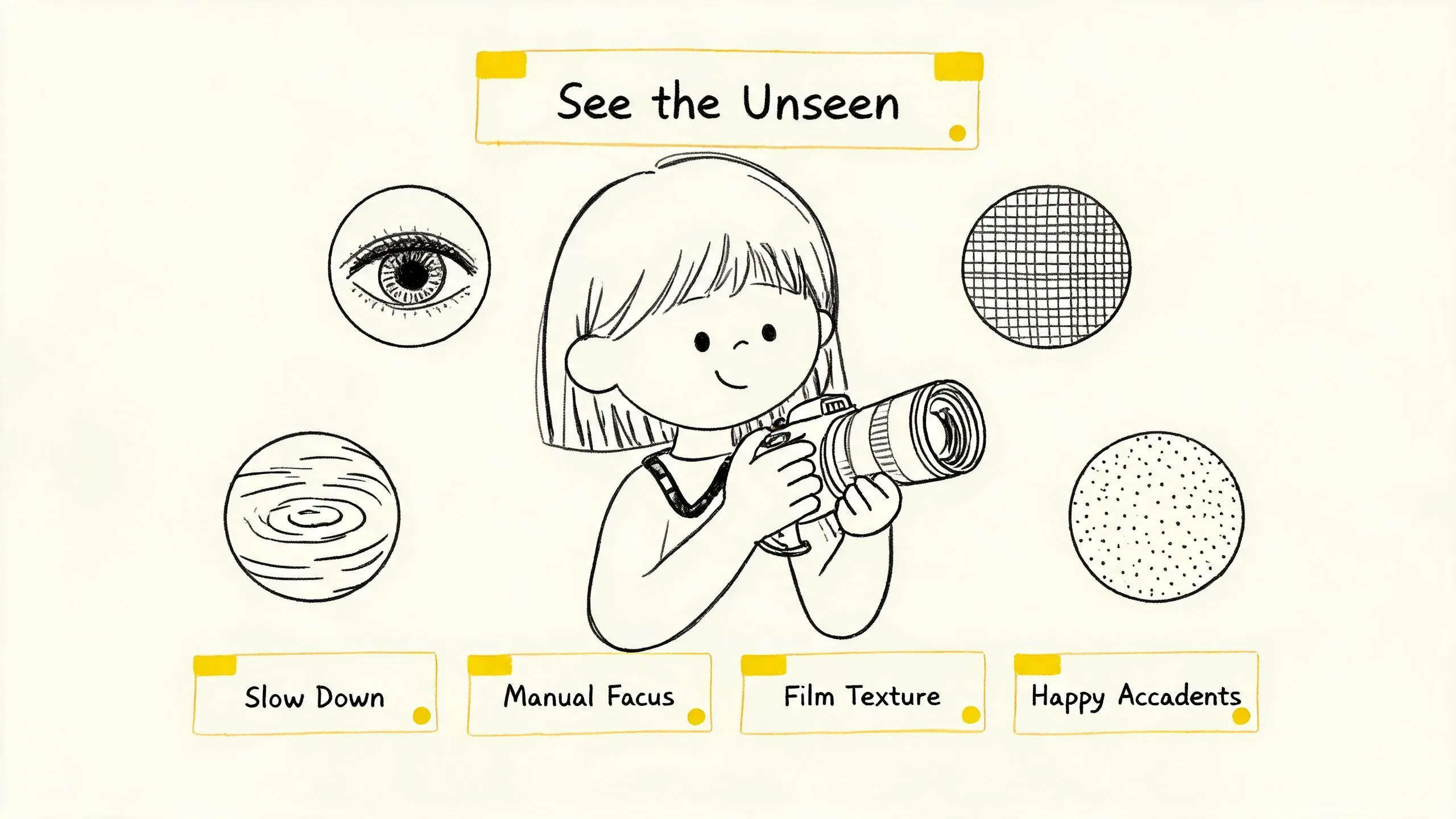
These ten microscopic perspectives aim to provide you with an inspiration list of “what to see.” The true joy of film macro photography often begins with equipment choices—whether enhancing your existing lens’s magnification economically with extension tubes or investing in a dedicated macro lens—but ultimately returns to a new habit of seeing. It requires you to slow down, observe patiently, focus manually, and converse with those subtle textures, light, and color in the viewfinder.
Film’s materiality, from grain to color, adds irreplaceable texture and accidental beauty to this microscopic exploration. It reminds us that photography is not just about capturing light but also recording the traces of matter and time. May this visual collection ignite your creative impulse, allowing you to discover the waiting, miracle-filled microscopic world in the most ordinary corners around you. Now, take your film camera and set out.
References
- 微距摄影如何帮助我们提高拍照水平? | 胶片的味道
- Extension Tubes: They May Save You From Spending Thousands | Fstoppers
- Insect and Flower Photography: Capture Stunning Macro Details Like a Pro | 500px Blog
- Into the Tiny Wild: Macro Photography of Insects & Flowers | APEXEL Official
- Exploring Macro Photography: Dedicated Macro Lens or Extension Tubes | Nature Photographers Network
- STRIKING TEXTURES, SENSUOUS SURFACES IN PHOTOGRAPHY AND FILM | Open Arts Journal
- Playful Macro Photography: How to Shoot Close-ups Without Expensive Equipment | Zoner Learn Photography
- FUJICHROME Velvia 50 / PROVIA 100F 彩色反转胶片 | 富士胶片中国官网
- 微距近摄接圈 MCEX-45G WR | 富士胶片中国官网
- 拍摄微观世界 | Sony China