The Emotional Spectrum of Film Photography on Overcast Days: Visual Inspiration and Creative Notes from 12 Diffused Light Scenes
Overcast days are a natural ally for film photography. The cloud layer acts as a giant softbox, transforming harsh sunlight into even, soft diffused light . Thi
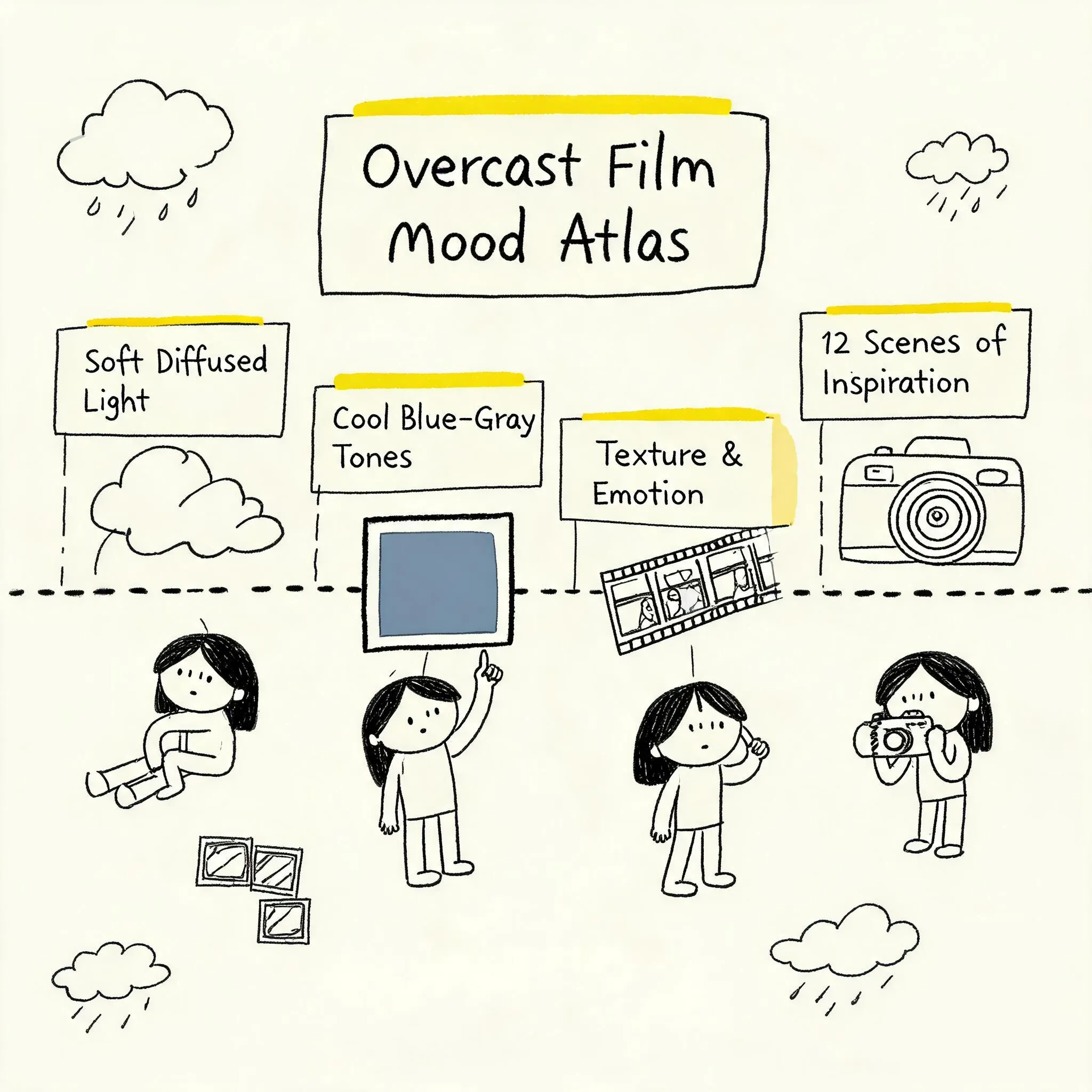
Overcast days are a natural ally for film photography. The cloud layer acts as a giant softbox, transforming harsh sunlight into even, soft diffused light . This light eliminates harsh shadows, creating subtle gradations between highlights and shadows. It not only greatly simplifies exposure control but also imparts a unique, serene emotional tone to the image . The color temperature of diffused light is typically cool (around 6500K–10000K), naturally casting a melancholic or tranquil blue-gray filter over the scene . For film creators, an overcast day is not an obstacle to shooting but an excellent stage for exploring emotion, texture, and color relationships.
This article does not discuss technical parameters or operational steps; instead, it focuses on “seeing.” Through 12 carefully selected overcast scenes, presented with sample photo sets and a creative note, we will directly showcase the visual possibilities that diffused light can evoke on film. This is a visual inspiration library prepared for you, hoping to ignite your impulse to pick up your camera and head out the next time you encounter a cloudy or rainy day.
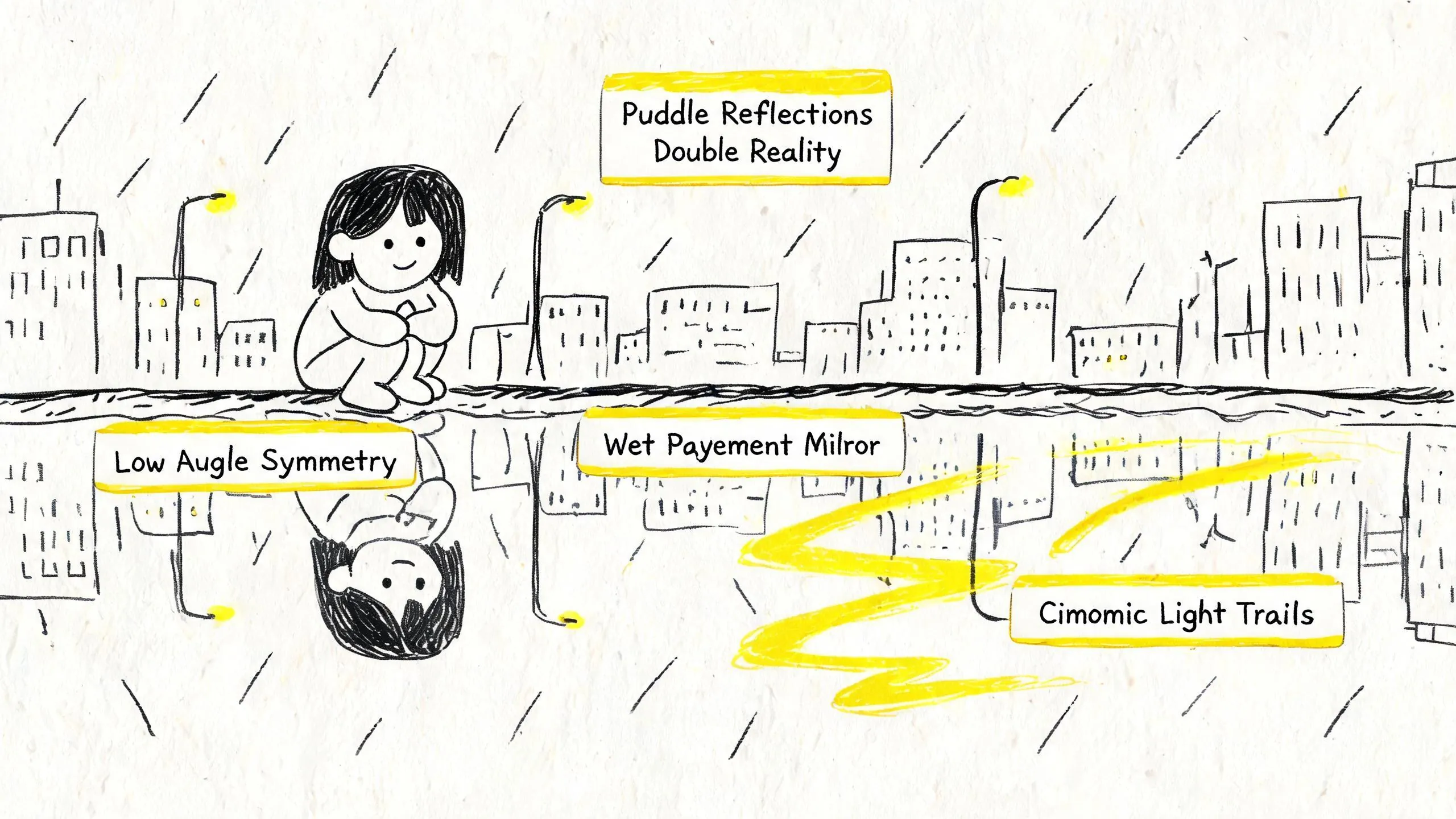
Scene 1: Reflections on Wet Streets After Rain
Creative Note: Wet pavement is a free mirror gifted by the city to photographers. It can invert ordinary street scenes, creating a surreal, layered double world.
After rain, when the streets gradually calm down and the ground remains wet, it is the best time to shoot . Puddles can reflect the sky, buildings, and lights like mirrors, adding a second dimension to the image. Try a low angle, even placing the camera close to the water surface, using a wide-angle lens to capture as large a reflective surface as possible . Symmetrical composition is particularly powerful at this moment. Streetlights and neon signs at night stretch long light trails on the wet asphalt; this interplay of light and shadow is full of cinematic feel . The overcast diffused light ensures a balance in brightness between the reflective surface and the actual scene, preventing overexposed highlights. People in the rain are often in a hurry and may not notice you crouching by a puddle, providing excellent cover for capturing authentic street moments .
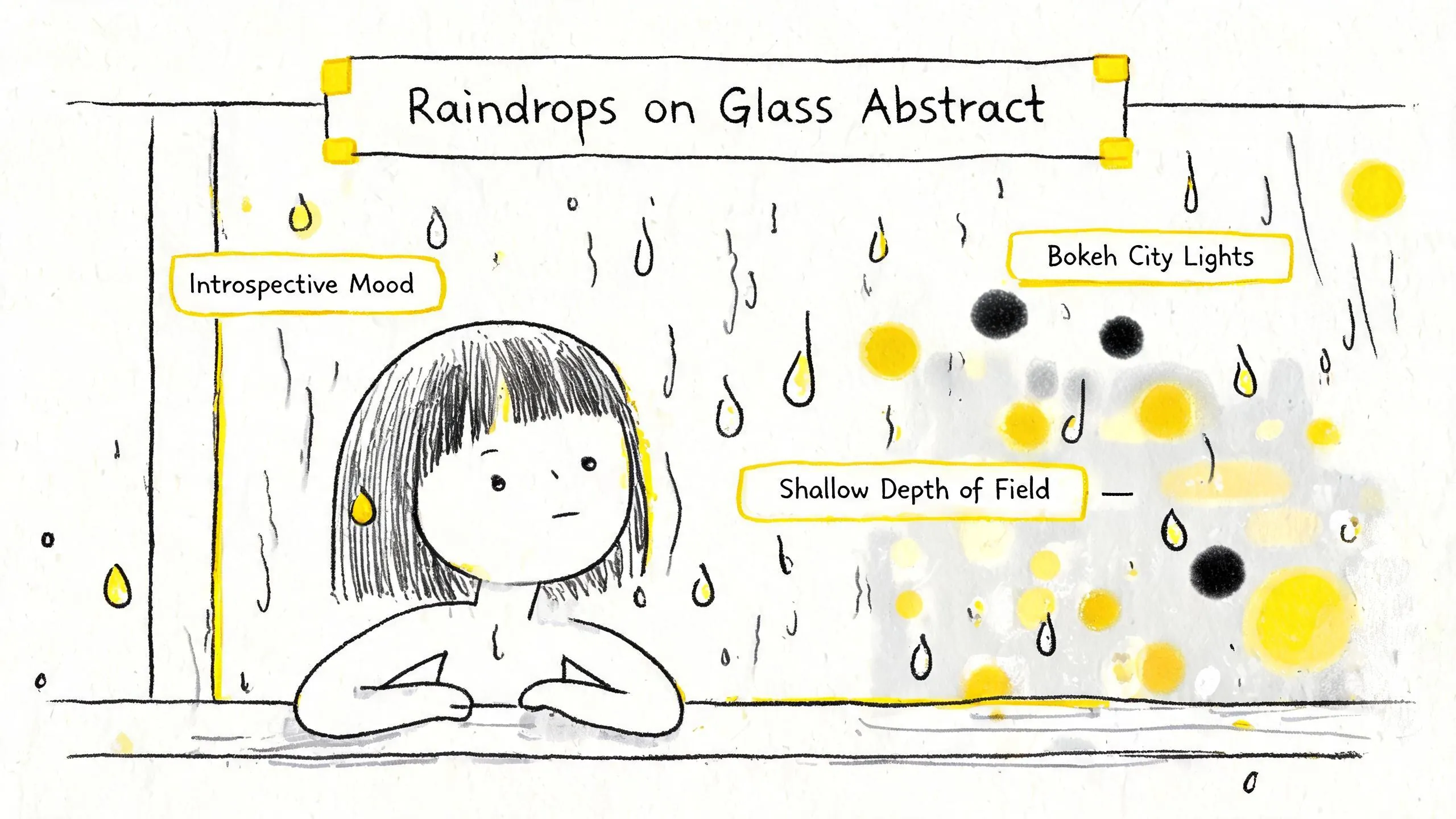
Scene 2: Raindrops and Urban Bokeh on Window Glass
Creative Note: Raindrops on glass are natural filters, shattering the urban lights outside into abstract patches of emotional color.
This scene is a perfect combination of shallow depth of field and diffused light. Focus on the raindrops on the glass surface, allowing distant city lights and traffic to blur completely into soft bokeh . The raindrops themselves refract light, creating subtle highlights and colors. Use a fast lens (e.g., 50mm f/1.4 or 85mm f/1.8), open the aperture wide, and manually focus on the glass surface. The overcast diffused light makes this contrast between sharp and blurred elements softer, avoiding the harsh glare that might occur under direct sunlight. The image conveys a detached, introspective urban mood.
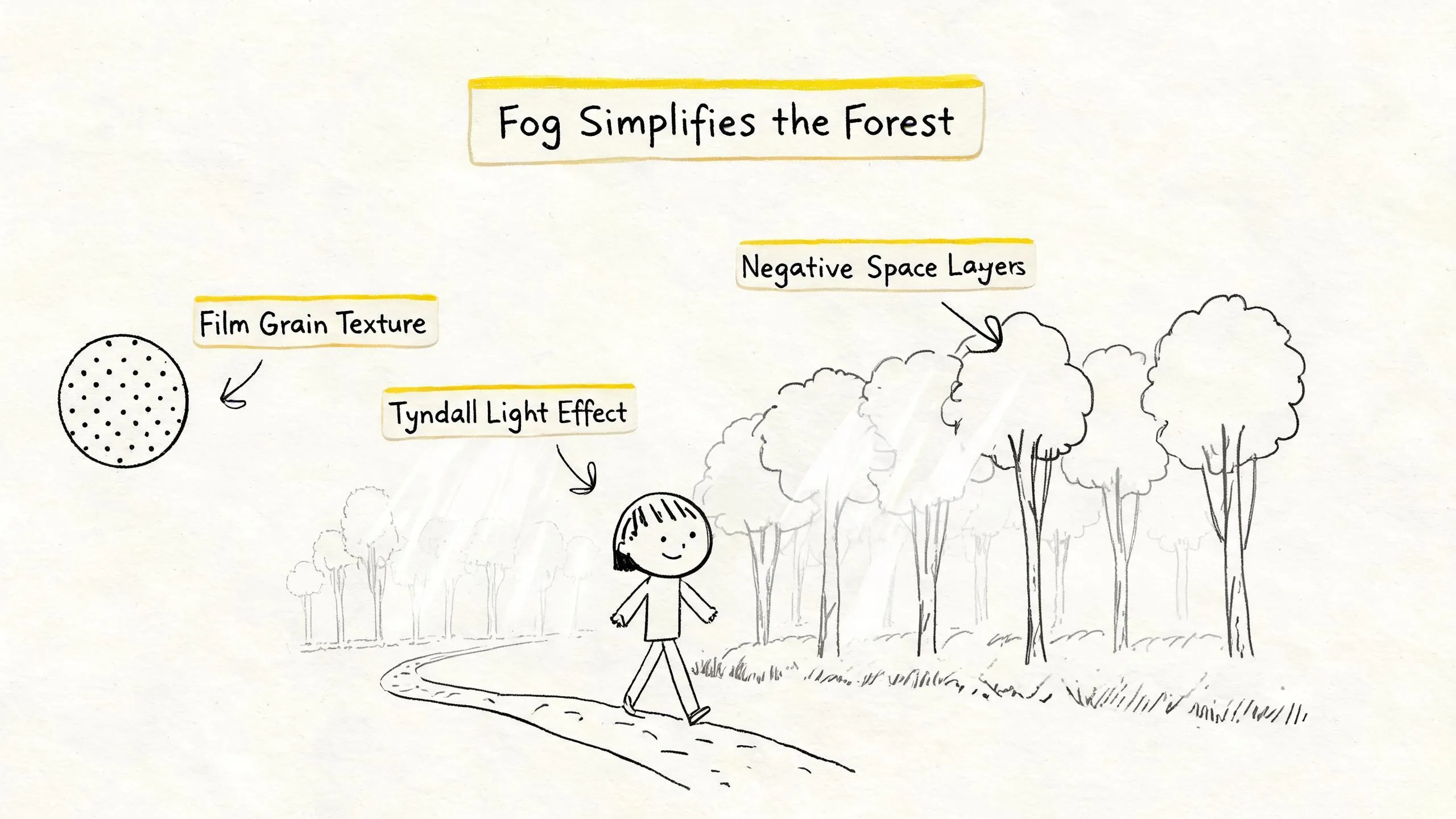
Scene 3: Forest Trail Shrouded in Mist
Creative Note: Mist is nature’s master of subtraction. It hides clutter, simplifies composition, and allows the grain of negative film and the haziness of water vapor to resonate beautifully.
Mist is one of the most atmospheric elements in photography . It effectively conceals the chaotic branches and leaves in the forest, simplifying complex scenes into clean, layered minimalist images . Mist naturally separates the foreground, midground, and background, creating a strong sense of depth. Film, especially negative film, with its inherent grain, pairs perfectly with the hazy texture of mist . Grain adds an organic texture to the smooth mist, making the image appear more “solid” and painterly. Try shooting towards the light source in backlight; the tiny water droplets in the mist will catch the light, creating a captivating glow and “Tyndall effect” (light beams) . In post-processing, avoid using the “Dehaze” slider, as it will completely destroy the atmospheric mood you worked hard to capture .
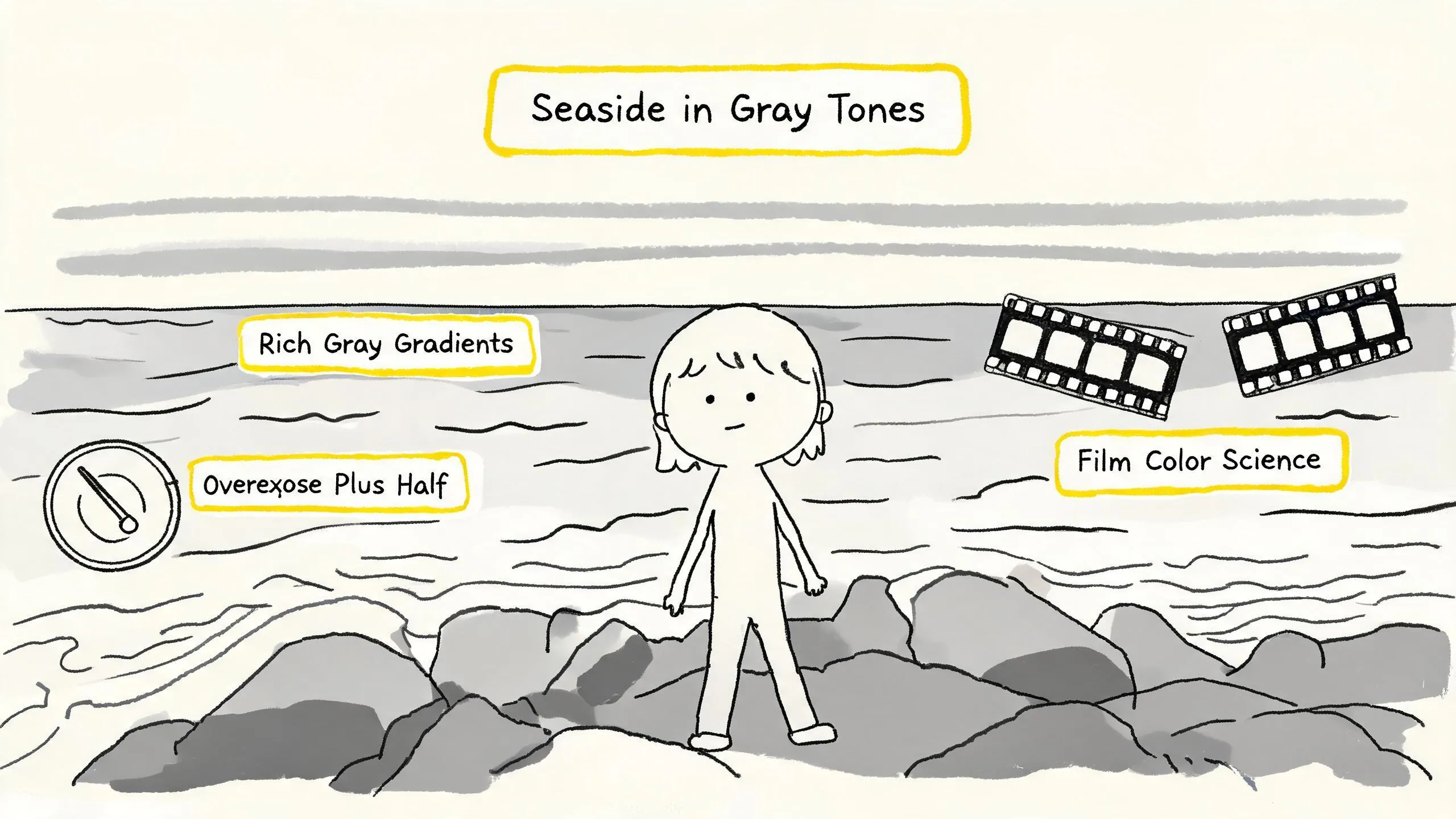
Scene 4: Gray-Toned Seascapes on Overcast Days
Creative Note: The sea on an overcast day loses its vibrant blue bustle, revealing rich gradations of gray. It is a litmus test for different color negative films to showcase their unique personalities.
The low saturation and cool tones of an overcast day are a perfect match for the seaside environment . Clouds reduce glare and reflections on the water surface, allowing the texture of the water and the details of the rocks to be clearly presented. This is also an excellent time to observe the color science of different films. For example, the discontinued Fuji Pro 400H, with its unique fourth color layer, renders richer greens and a cooler overall tone in daylight, making it very suitable for expressing the cold, quiet atmosphere of an overcast seaside . Kodak Portra 400, on the other hand, tends towards warm golden tones, with smoother transitions in highlights and shadows . When shooting seascapes on overcast days, try slight overexposure (+0.5 to +1 stop). Negative film can retain highlight details well while making shadows more transparent .
Scene 5: Humanistic Portraits at a Rainy Market
Creative Note: Under umbrellas are individual mobile softboxes. Diffused light wraps evenly around faces, rendering skin tones soft and true.
Overcast diffused light is an ideal light source for portraiture, producing even, soft skin tones without unflattering hard shadows . At a rainy market, people hold umbrellas, and the umbrella canopy itself becomes an excellent diffusion tool. When shooting, avoid using direct flash, as it will destroy this natural, soft atmosphere and make facial lines harsh . It’s advisable to open the aperture wide or slightly increase the film’s ISO (e.g., using Portra 800) to ensure consistent lighting on the subject and background. Colors on overcast days are more likely to “pop” from the environment; the subjects’ clothing and umbrella colors will become highlights in the frame .
Scene 6: Macro World in a Rainy Botanical Garden
Creative Note: Rain washes away dust, diffused light smooths shadows, and the details of water droplets and leaf veins present a moist, vibrant texture on film.
A botanical garden after rain is a paradise for macro photography. Leaves and petals are washed clean by the rain, with water droplets glistening with moisture . Diffused light illuminates every corner evenly, allowing you to focus on the form of water droplets and the texture of leaf veins without worrying about harsh shadows. For macro shooting, manual focus is recommended, using the camera’s live view magnification to ensure precise focus . A 90mm or 105mm macro lens is an ideal tool. The fine grain and color reproduction of film can beautifully capture this vibrant, moist feeling.
Scene 7: Light Trails of Traffic on a City Overpass
Creative Note: The Blue Hour on overcast days is longer and more stable, providing an excellent window to capture urban light trails on film.
The Blue Hour, the brief period after sunset when the sky turns deep blue, is the golden hour for shooting traffic light trails . On overcast days, the light during this period is more even and sustained, giving you more time to shoot. To form continuous light trails, the exposure time needs to be at least 10 seconds, with 15-30 seconds often yielding better results . A tripod is essential. Long exposures with film require special attention to reciprocity failure, and different films have different compensation characteristics, so you need to consult resources . For example, experienced photographers shooting in Hong Kong might use ISO 400 or higher film, with an f/16 aperture and an exposure time of about 8 seconds . If the sky is still bright, an ND filter can be used to extend the exposure time .
Scene 8: Textural Close-ups of Old Buildings After Rain
Creative Note: Wet brick walls, stone steps, and moss, under the low-contrast light of an overcast day, reveal the richest and most delicate textural layers.
Overcast diffused light is the best light for showcasing texture, especially suitable for subjects like ancient architecture and old alleys . Rain soaks the bricks and stones, darkening their color and making the texture more pronounced. The green of moss appears particularly vivid in the cool-toned environment. Due to the even light, the transition from highlights to shadows is very smooth, capturing every detail on the material’s surface. You can try using a polarizing filter (CPL) to further enhance the color saturation of brick walls and moss while eliminating reflections from wet surfaces, elevating the texture to another level . A warming filter can also add a touch of warmth to the cool, overcast image.
Scene 9: Indoor Portraits by the Window
Creative Note: An overcast window is a large, soft light source box, giving indoor portraits a smooth, natural, and non-aggressive beauty.
On overcast days, clouds filter the sunlight, turning the window into a natural, giant softbox . This light enters the room from the side, making it ideal for shooting close-up portraits or lifestyle portraits . It produces very smooth skin tone transitions, avoiding a “plastic” look, with skin texture appearing real and delicate . The subject can sit close to the window, letting the light fall evenly on their face. If fill light is needed for the front of the face, a white foam board or collapsible reflector is sufficient; it will softly reflect the window light back .
Scene 10: Colorful Grain of Neon Lights on a Rainy Night
Creative Note: When night and rain merge, the grain of high-ISO film becomes the brush that renders the halos and hazy atmosphere of neon lights.
Neon lights on a rainy night are a concentrated expression of urban mood. CineStill 800T is the iconic film for this scene . Based on Kodak Vision3 motion picture film, its unique process produces a soft red or orange halation effect around bright light sources . As a tungsten-balanced (3200K) film, it renders natural, neutral colors under artificial light like neon; if used in daylight, it will exhibit a strong blue shift . The ISO 800 sensitivity allows for handheld shooting at night . The inherent grain of high-ISO film, in the diffused light of a rainy night, is not a drawback but adds a cinematic texture and narrative quality to the image .
Scene 11: Pastoral Poetry of a Rainy Countryside
Creative Note: Medium format negative film shows amazing latitude on overcast days, capable of simultaneously capturing the rich details of a gloomy sky and wet earth, rendering a serene pastoral poem.
The countryside on an overcast day tends towards unified tones, with more restrained emotional expression. Medium format film can fully leverage its huge advantages at this moment . The larger film area brings a wider dynamic range, retaining more detail information between highlights (sky) and shadows (fields, woods) . Negative film naturally has high exposure latitude. When shooting on overcast days, slight overexposure (+0.5 to +1 stop) often yields richer colors and cleaner shadows . The soft, natural colors and lower contrast produced by medium format negative film are very suitable for expressing the quiet, distant poetry of the countryside after rain .
Scene 12: Still Life in a Studio on a Rainy Day
Creative Note: Overcast window light is the most hassle-free light source for still life photographers. It is even and soft, sufficient to outline the form and texture of objects without complex lighting setups.
Overcast days are ideal conditions for natural light still life photography—you don’t need any additional diffusion cloths or films . Simply arrange the still life near the window; the cloud-filtered diffused light will fall evenly on the objects . This light is sufficient to express the form, color, and texture of the objects. To eliminate shadows on the back side of the objects, you can place a white foam board or reflector on the other side for fill light . This scene is perfect for photographing photography-related still life like film cameras, lenses, and developing tanks. The atmospheric mood of an overcast day and the vintage quality of film itself can create a wonderful chemical reaction.
Creative Notes Collection: Quick Reference Table for 12 Scenes
| Scene | Recommended Film | Lens Suggestion | Parameters/Key Points Quick Note |
|---|---|---|---|
| 1. Wet Street Reflections | Portra 400 / Ektar 100 | 35mm Wide-angle | Low angle, symmetrical composition, shoot when wet after rain |
| 2. Raindrops on Window Glass | Portra 400 | 50mm f/1.4-2 | Shallow depth of field, manual focus on glass |
| 3. Misty Forest | Portra 400 / HP5+ 400 | 35-85mm | Backlight towards light source, avoid “Dehaze” |
| 4. Overcast Seascapes | Pro 400H / Portra 400 | 24-70mm | Slight overexposure +0.5-1EV |
| 5. Rainy Market Portraits | Portra 400 / Portra 800 | 85mm f/1.8-2 | Wide aperture, avoid flash |
| 6. Rainy Macro | Ektar 100 / Portra 160 | 90-105mm Macro | Manual focus, tripod |
| 7. Traffic Light Trails | Portra 400 / Ektar 100 | 24-35mm | f/8-16, 10-30 seconds, tripod, note reciprocity failure |
| 8. Old Building Texture | Portra 400 / Ektar 100 | 50-85mm | Polarizer to enhance saturation |
| 9. Indoor Window Portraits | Portra 400 / Pro 400H | 85mm f/1.4-2 | Large window, white reflector for fill light |
| 10. Rainy Night Neon | CineStill 800T | 35mm f/1.4-2 | ISO 500-800, handheld, utilize halation |
| 11. Rainy Countryside | Portra 400 (120) | 80mm (6×7) | Tripod, slight overexposure, leverage medium format latitude |
| 12. Studio Still Life | Ektar 100 / Portra 160 | 50-80mm | Window diffused light, reflector for fill light |
Film photography on overcast days is an exercise in observation and feeling. It invites us to let go of the pursuit of strong light and shadow, and instead focus on the subtle changes in color, the delicate presentation of texture, and the quiet flow of emotion. The 12 scenes in this collection are 12 possible starting points. Take your camera and a few rolls of film, step into the overcast day, and discover your own unique emotional spectrum.
References
- Cloudy and Overcast Day Photography - The Photo Hikes
- Tips For Shooting Photos On A Cloudy Day | Mastin Labs
- Natural Light Photography Guide | The School of Photography
- 阴天怎么拍照?附风景、人像阴天拍照技巧
- 10 rainy day photo tricks - 500px
- 街頭攝影攻略:10個雨天街拍必學拍攝技巧 | Fotobeginner
- DIY簡單工具來作微距攝影- 讓小水珠多一點色彩 | Fotobeginner
- Capturing Atmosphere: A Photographer’s Guide to Fog and Mist – Max Rive Photography
- Mastering the Mood - How to Photograph Fog and Mist | Mikko Lagerstedt
- Fujifilm Fujicolor PRO 400H Film Review | Analog.cafe