The Cultural DNA of Film Still Life: From Dutch Golden Age Tableaux to Contemporary Film Creators' Desktop Aesthetics
When we talk about "still life photography," especially film still life photography, we often focus on light, composition, and equipment. However, beneath this
The Antecedents of Still Life Painting: From Dutch Dining Tables to Cézanne’s Apples
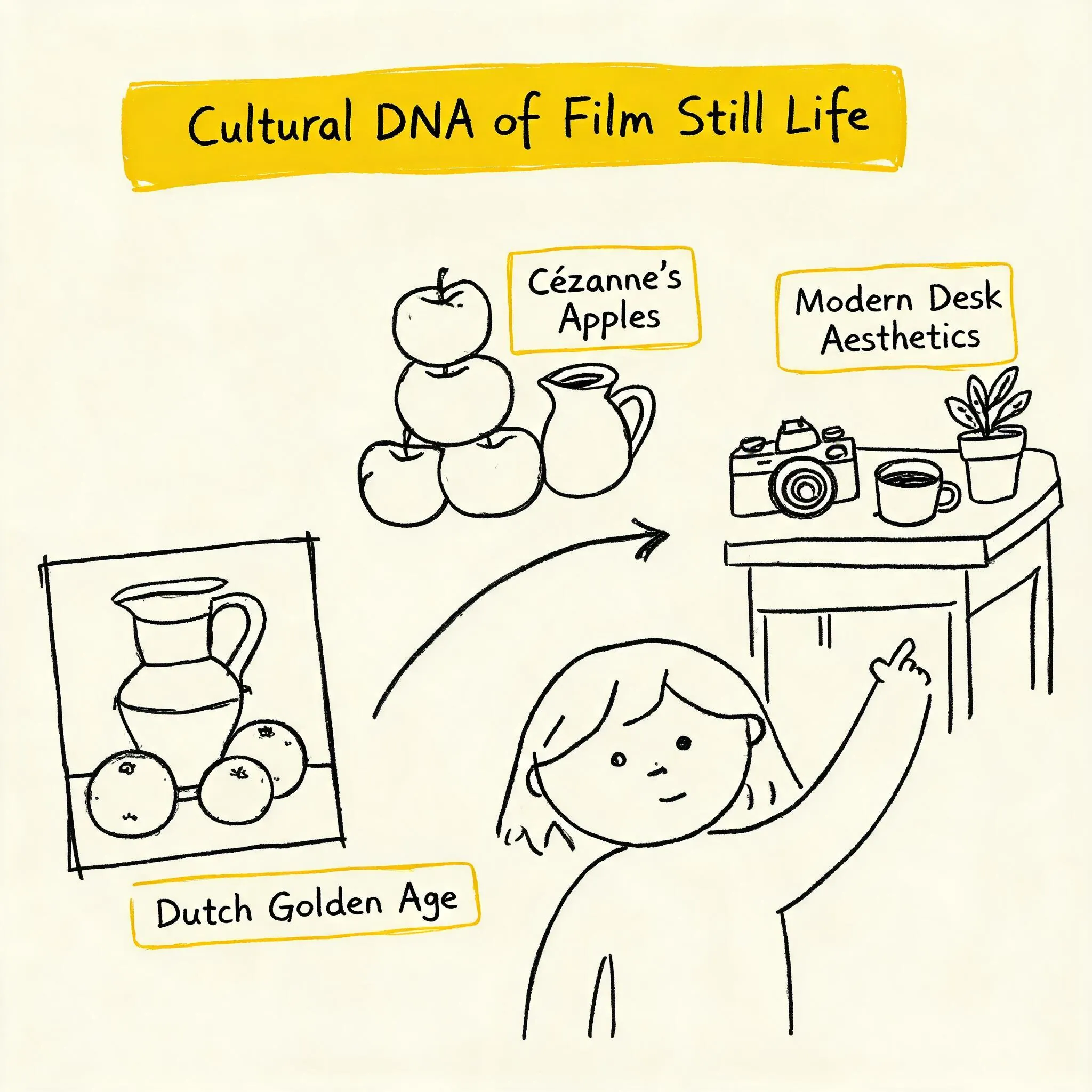
When we talk about “still life photography,” especially film still life photography, we often focus on light, composition, and equipment. However, beneath this genre lies a deep and fascinating cultural lineage. It did not begin with the invention of the camera but was established as an independent aesthetic and philosophical entity on canvas as early as the 17th century in the Netherlands. Understanding this lineage helps us move beyond the level of “photographing beautiful objects” and truly enter a creative context of “dialogue with objects.”
The term “Still Life” as an independent painting genre derives its English name from the Dutch “stilleven,” while Romance languages like French call it “nature morte,” meaning “dead nature.” This nomenclature itself reveals the core characteristic of early still life painting: it depicts objects stripped of life’s dynamism, subjected to a static gaze . In the long-standing “hierarchy of genres” in Western painting, still life occupied the lowest tier, considered less noble than history or religious painting. Yet, it was precisely this “lowly” status that allowed it to flourish during the Dutch Golden Age in the 17th century, becoming a favorite among the emerging middle-class collectors .
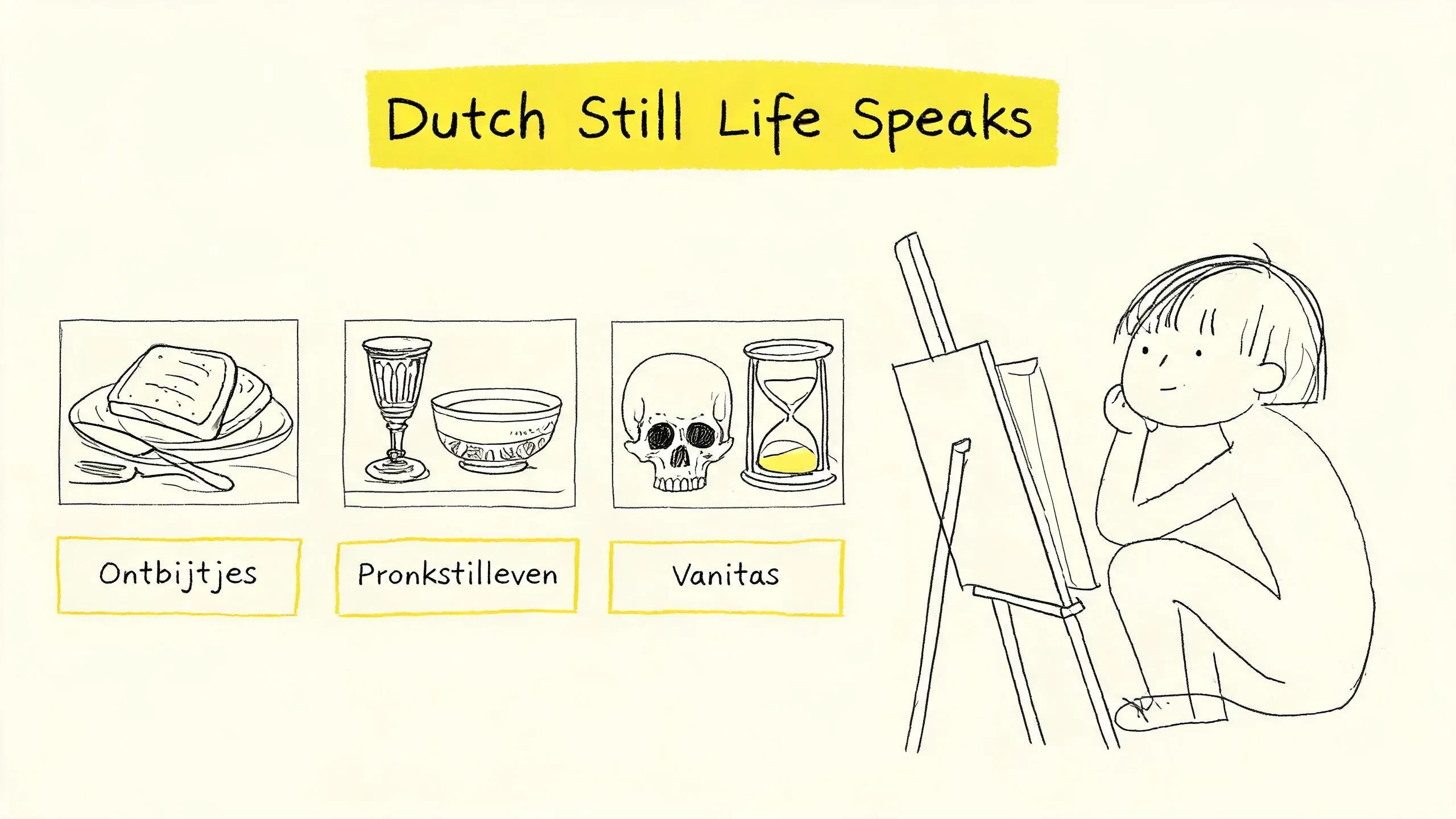
Dutch Golden Age still life paintings were far from simple arrangements of objects. They developed several culturally rich subgenres. Among them, the “breakfast piece” (ontbijtjes) depicted exquisite meals, silverware, and glassware, reflecting the affluent civic life of the Dutch commercial republic. Pioneer painter Clara Peeters was a master of this type, renowned for her delicate rendering of light reflections on metal vessels, often embedding tiny reflections of herself on their surfaces—like the artist’s signature within the still life . Even more opulent was the “pronkstilleven” (ostentatious still life), brought to its peak by masters like Willem Kalf. His compositions often featured deep, dark backgrounds, focusing on Venetian goblets, Ming dynasty porcelain bowls, and half-peeled citrus fruits—luxuries from across the globe. This was not merely a display of wealth but a visual testament to Dutch maritime dominance and trade networks .
However, the most profound tradition in Dutch still life is undoubtedly the “Vanitas.” Its name comes from the Bible’s Book of Ecclesiastes: “Vanity of vanities, saith the preacher, all is vanity” . These paintings, amidst abundant still life elements, deliberately included skulls, hourglasses, burnt-out candles, or wilting flowers as moral admonitions on the brevity of life and the illusory nature of earthly pleasures. A Vanitas still life is both a feast for the material senses and a meditation on time and mortality. It teaches the viewer to appreciate the beauty before them while never forgetting its inevitable transience.
This lineage was completely reshaped at the end of the 19th century by another giant—Paul Cézanne. Cézanne liberated still life from the traditions of realism and allegory, propelling it into the structural explorations of modernism. His apples, pitchers, and tablecloths were no longer meant to tell stories or炫耀 wealth but to investigate the underlying structure of objects, color relationships, and pictorial composition. He broke traditional rules of perspective, using planes of color and small brushstrokes to construct a solid yet complex visual order . Cézanne’s still life was a pure visual revolution. He was called “the father of us all” by both Matisse and Picasso, and his influence profoundly shaped all subsequent still life creations aimed at formal exploration .
From the material contemplation on Dutch dining tables to the structural revolution in Cézanne’s apples, the cultural DNA of still life painting was long established: it concerns seeing, time, and the spiritual dimension behind matter. When film photography inherits this tradition, what it carries is this centuries-long gaze upon and contemplation of “objects.”
The Unique Texture of Film Still Life: Grain, Tone, and “The Breath of Objects”
If the tradition of still life painting provides cultural depth for film still life, then the film medium itself endows it with a unique aesthetic texture and emotional warmth. This texture does not come from post-processing filters but from the physical interaction of silver halide crystals, chemical dyes, and light. It lends everyday objects a “sense of being gazed upon” and a “breath” that digital images struggle to replicate.
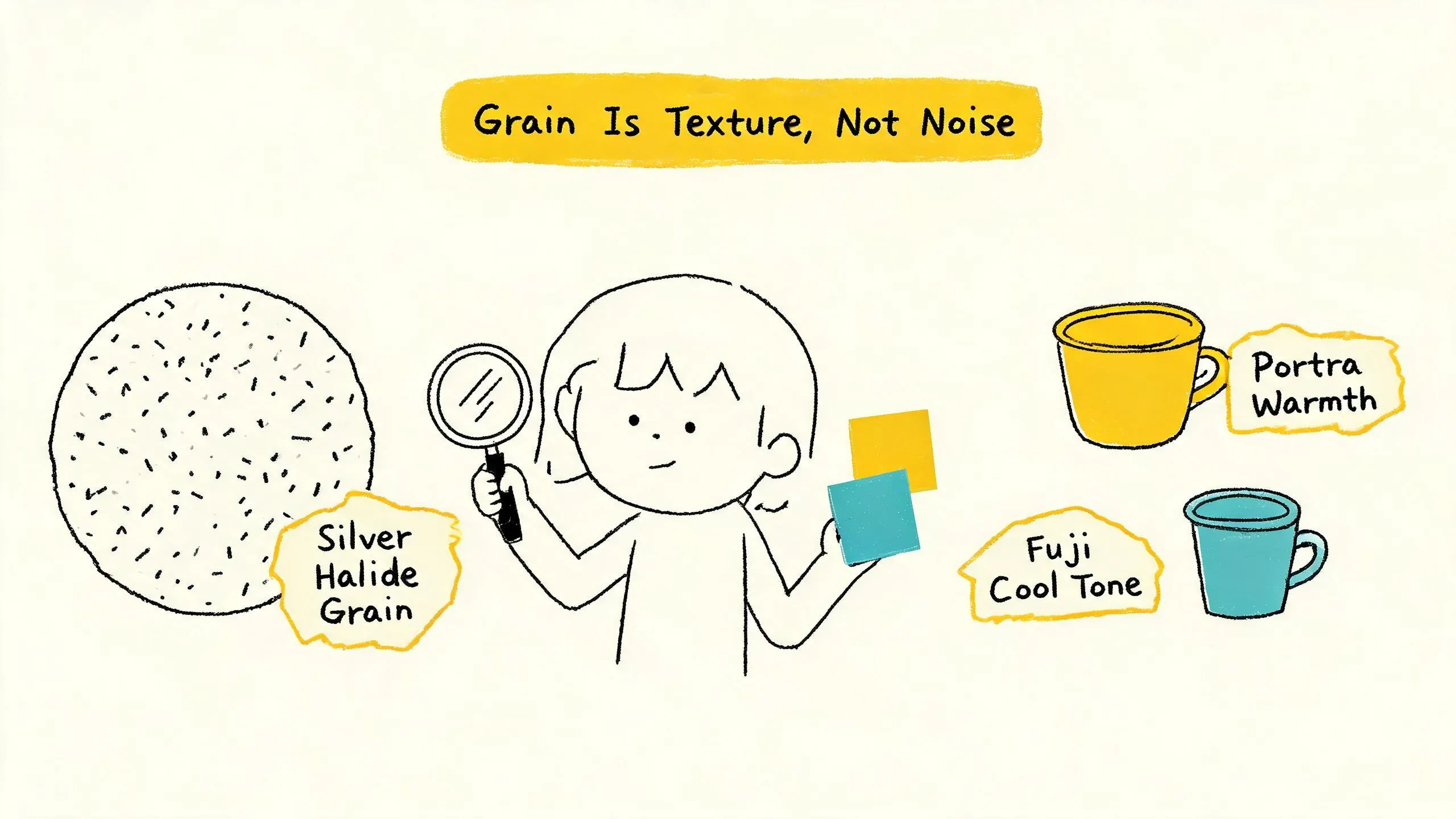
The most immediate difference comes from grain. Digital imagery strives for ultimate smoothness and purity, while the grain on a film negative is the physical trace left by light-sensitive silver halide crystals after development. This grain is not “noise”; it has an organic, irregular distribution, overlaying the image with a delicate “handmade” texture. When shooting still life, especially with soft light and shallow depth of field, grain can effectively separate the subject from the background while adding a warm tactility to smooth surfaces like ceramics or glass. It makes the image appear less “perfect,” yet more alive and warm, as if one can hear the slow “breath” of objects in time.
Color is another language of film still life. Different film stocks act like different brushes, painting the same scene with vastly different emotional tones. Take, for example, the most mainstream contemporary portrait/still life film, the Kodak Portra series. Originally designed for portraits and weddings, its color philosophy centers on “balance” and “naturalness” . The 2010 version of Portra 400 integrated the characteristics of the original NC (Natural Color) and VC (Vivid Color) versions, incorporating technology from Kodak’s cinema films to achieve finer grain, better sharpness, and more natural color reproduction . In still life photography, Portra tends to render soft, warm skin tones and a neutral-to-warm color palette. Its restrained saturation excels at capturing the delicate textures of wood, fabric, and food, creating a serene, nostalgic, and intimate atmosphere.
In contrast, Fuji films (like the discontinued Pro 400H) often exhibit a cool tone with a cyan-green cast. This color language is better suited for depicting cool morning light, metallic textures, or objects with an Eastern Zen aesthetic, evoking a quiet, detached, and even slightly melancholic mood. The choice of film stock is itself a crucial aesthetic decision in still life creation, directly defining the “emotional color temperature” of the image.
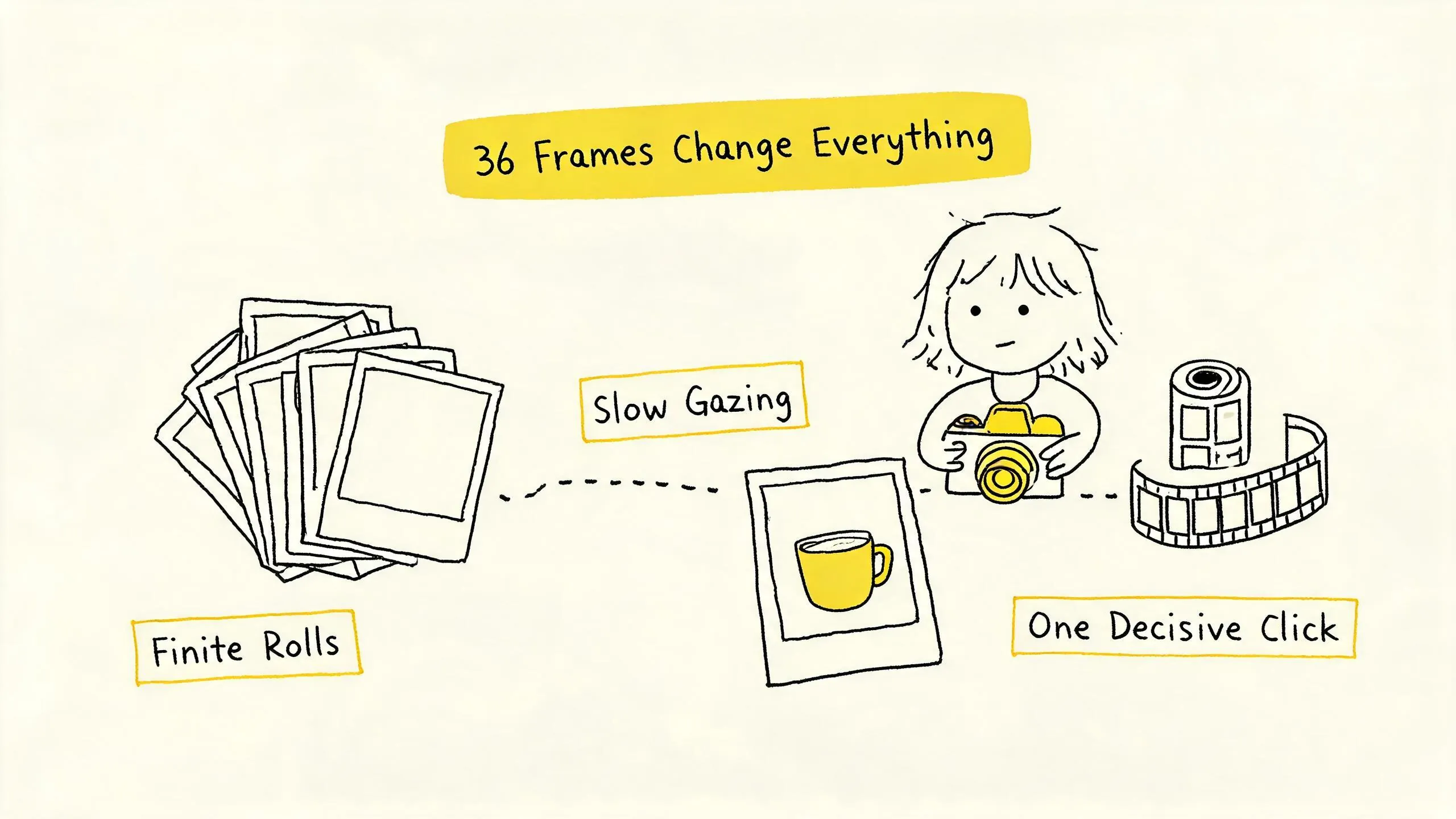
More importantly, the limited nature of film photography profoundly changes the creator’s relationship with “objects.” A roll of film typically contains only 24 or 36 exposures, and each press of the shutter means an irreversible cost. This “limitation” forces the creator to switch from the digital era’s “spray and pray” mode to a “gaze” mode. You can no longer take ten shots of a cup of coffee to pick the best one; instead, you need to spend time observing how light plays on the rim, waiting for the perfect moment, then carefully composing, metering, and pressing the shutter. This process itself is a deep dialogue with the subject. You must truly “see” it, understand its presence in space, to capture its essence in a limited exposure.
Therefore, the unique texture of film still life is the result of the interplay between the tactile quality of grain, the tonal characteristics of the film stock, and the contemplative behavior induced by limited exposures. It transforms still life from a simply recorded object into a “living entity” infused with time, emotion, and the creator’s subjective perspective. This “breath of objects” is the most precious aesthetic quality of film still life in the digital age.
Contemporary Film Community’s Still Life Practices: From Instagram to Offline Print Swaps
In today’s digital-dominated image production landscape, film still life photography has not waned but has instead revitalized cultural vitality within enthusiast communities. From Instagram’s visual瀑布流 to offline physical print exchanges, a unique creative ecosystem and community language have formed around film still life. This is both an echo of classical still life traditions and a reflection and supplement to digital-era visual culture.
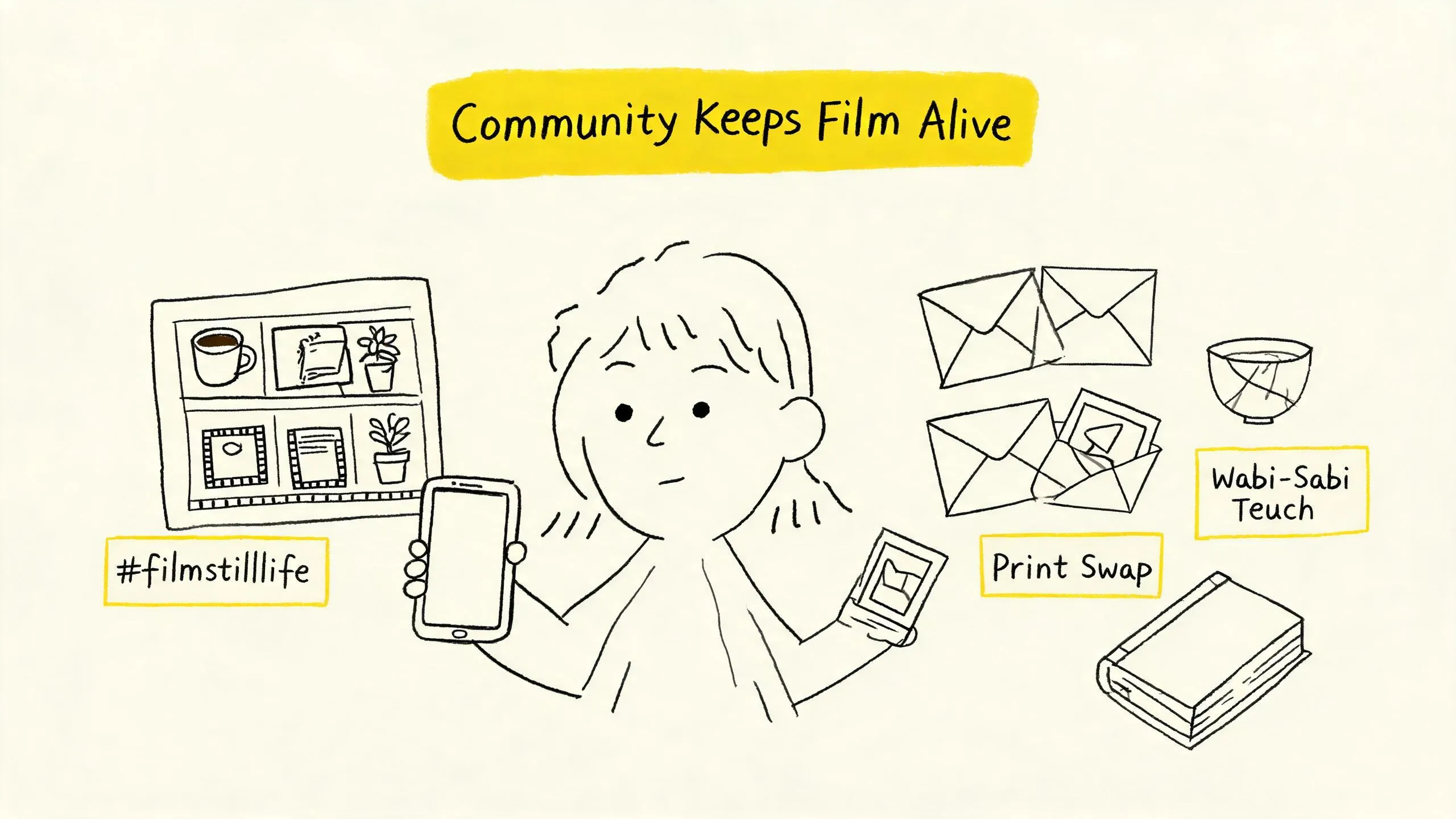
On social platforms like Instagram, the #filmstilllife hashtag has coalesced into clear aesthetic trends. Unlike commercial still life photography that pursues ultimate clarity and perfect lighting, film still life here exudes a strong “lived-in” and “handmade” feel. Typical scenes include: a corner of a wooden desk bathed in natural light, with an open book, a cup of coffee, and a fountain pen; or a dark kitchen counter displaying bread, an olive oil bottle, and a ceramic jar; or a close-up of a potted plant on a windowsill . These images do not seek grand narratives but focus on the momentary state of everyday objects under specific light and time. Through film’s grain and色调, creators transform mundane objects into contemplative visual poems, emphasizing “being gazed upon” rather than “being displayed” .
Behind this practice lies the film creator’s redefinition of the act of “seeing.” As emphasized by communities like Lomography when guiding film still life photography, “keeping it bright” and focusing on how light falls on the subject is key to creation . This is not just technical advice but an observational philosophy: the core of still life photography is not the object itself but the interaction between light and the object. Film’s latitude and color rendering make this process of observing and capturing light full of uncertainty and surprise; each unboxing after development feels like a dialogue with one’s past self.
Community interaction extends beyond the online realm. Film Still Life Print Swaps are another important cultural practice. Creators print their most satisfying film still life works as physical photos and exchange them with others via mail or offline events. This act is highly symbolic: it returns the image to a physical form, creating a fascinating intertextuality with the still life subject photographed. A film photo of old books, printed on paper and sent to another enthusiast, becomes a new “still life” on their desk. This process builds an emotional connection based on physical carriers, a gentle resistance to the culture of infinite replication and instant sharing of digital images.
Worth special attention is that East Asian film creators have infused this global still life tradition with a unique regional aesthetic. Creators from Japan, China, and Korea naturally integrate Eastern object aesthetics—such as tea utensils, stationery, wagashi, and Chinese dim sum—into the Western-derived still life framework. Their works often reveal the aesthetic sensibility of “wabi-sabi”: appreciating the beauty of imperfection, transience, and incompleteness. A tea bowl with repair marks, a thread-bound book with worn edges—under film’s rendering, their materiality and sense of time are infinitely amplified. This fusion is not a simple叠加 of subjects but a deep resonance of emotions toward “objects” in two cultures, enriching the vocabulary of global film still life photography.
From online visual trends to offline physical exchanges, from Western everyday scenes to Eastern object aesthetics, the contemporary film community’s still life practices have built a vibrant cultural network. It proves that still life creation is far from an isolated technical exercise but a profound form of community exchange and cultural expression.
Slow Shooting as Ritual: The Temporal Perspective and Emotional Value of Film Still Life Creation
In the digital age, which pursues instant feedback and infinite possibilities, film still life photography chooses a seemingly “inefficient” path. This “inefficiency” is not a flaw but a deliberate cultural choice, embodying a unique temporal perspective and emotional value. It offers creators a form of “mindfulness practice” and spiritual healing against the fast pace of modern life.
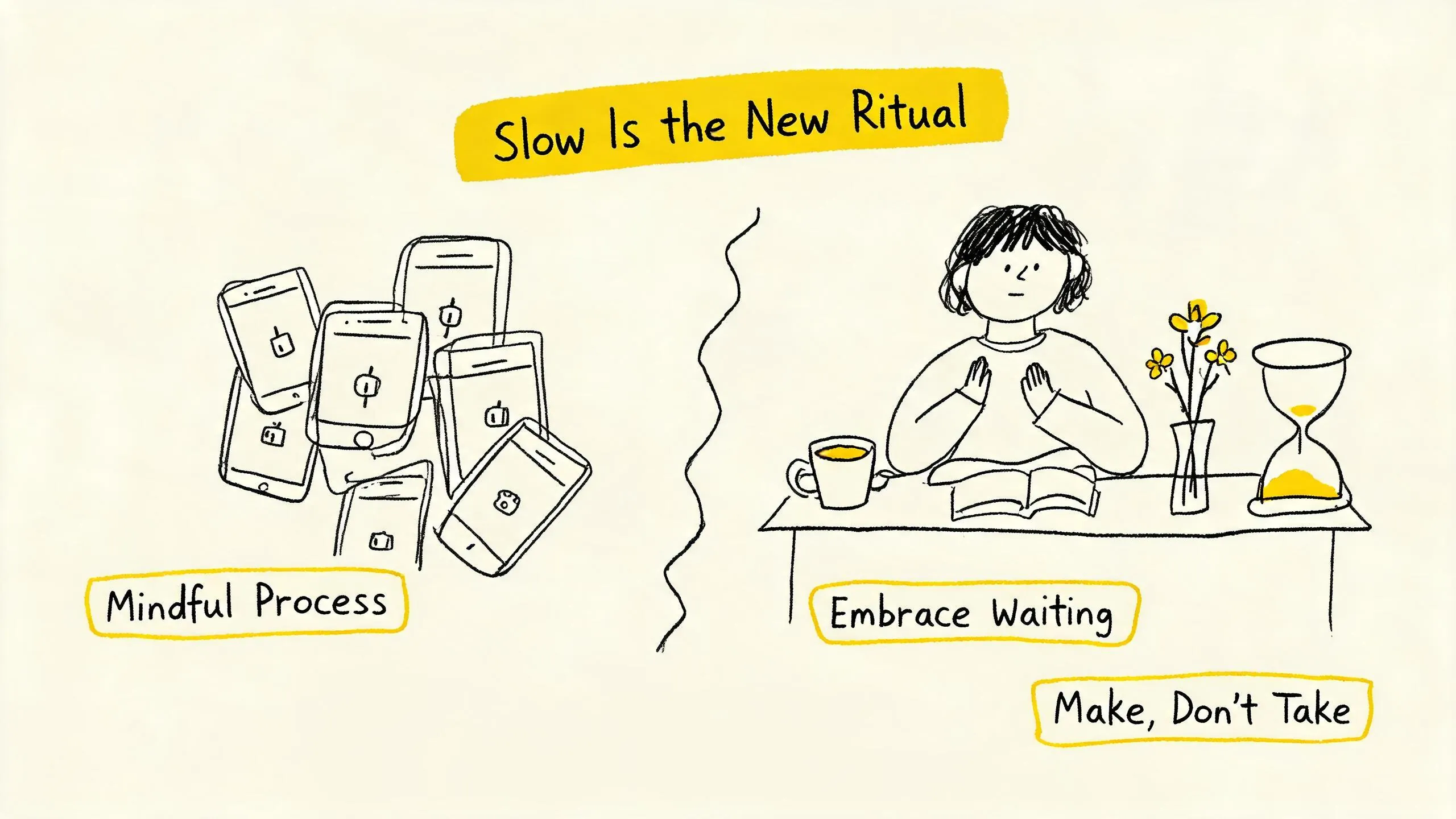
The “slowness” of film photography is first reflected in its physical process. From deciding to shoot, loading the film, metering, composing, pressing the shutter, to finishing the roll, sending it for development, waiting for processing, scanning, or enlarging, the entire chain is time-consuming and irreversible. For still life creation, this “slowness” is further amplified. For a desktop setup, a creator might spend tens of minutes or even longer adjusting object positions, observing changes in light, until the most harmonious composition is found. Each shutter release is a solemn decision, because you know that after this frame, there is one less frame. This “deliberation” imposed by physical constraints forces the creator to shift from “taking” photos to “making” photos. You must fully immerse yourself in the present moment, coexisting with the objects, light, and space before you.
This creative process is described by many film enthusiasts as a “mindfulness practice.” On platforms like Instagram, creators sharing their experiences mention: “only get one quick frame, it forces me to be present.” When your attention is entirely focused within the viewfinder’s frame, observing the subtle movement of light and shadow, feeling the tactile feedback of the mechanical shutter, daily anxieties and distractions are temporarily set aside. The act of setting up a tripod for a cup of coffee, a book, or a bouquet of flowers is itself a ritual that calms the mind. It does not pursue efficiency of results but values the focus and awareness in the process.
The emotional value of film still life creation stems precisely from this “slowness” and “sense of ritual.” It offers a satisfaction entirely different from digital photography. Digital photography’s instant playback and infinite retakes can easily lead to anxiety and endless optimization in the belief that “there’s always a better one.” Film, especially in still life creation, derives much of its pleasure from waiting and the unknown. At the moment you press the shutter, you cannot see the result immediately; you can only trust based on experience and intuition. This waiting extends from the end of shooting until development is complete. When you finally see the scanned or enlarged image, the distribution of grain, the rendering of color, unexpected light leaks, or slight soft focus can all become pleasant surprises. This delayed gratification and uncertainty allow the final image to carry more emotional memory—it is not just a record of objects but the crystallization of that focused, serene creative time.
Therefore, the value of film still life photography in the contemporary era extends far beyond producing a beautiful photo. It is an anti-efficiency creative act, a quiet corner carved out for oneself amidst the digital torrent. Through its physical processes and temporal delays, it rebuilds the deep connection between people and objects, and between people and the creative process. When a film enthusiast meticulously arranges a still life scene and waits weeks just to see the final image, they are practicing not just a photographic genre but a life attitude: choosing to slow down in a fast-paced world; embracing the beauty of waiting and the unknown in a world that craves instant gratification. This practice of “slow shooting as ritual” is the core cultural DNA and emotional resonance of film still life photography in the contemporary age.
References
- Still life - Wikipedia
- Vanitas - Wikipedia
- Clara Peeters - Wikipedia
- Willem Kalf - Wikipedia
- Paul Cézanne - Wikipedia
- Pronkstilleven - Wikipedia
- Kodak Portra - Wikipedia
- 5 Still Life Photography Ideas to Try on Film - Lomography
- 6 Instagram Still Life Photography Artists To Be Inspired By - Pith and Vigor