The Social Code of Instant Photos: How Gen Z is Redefining "Presence" with Polaroids
As smartphone cameras make every capture effortless—almost cheap—a silent "counter-movement" is spreading among young people. They are willing to pay for a phys
As smartphone cameras make every capture effortless—almost cheap—a silent “counter-movement” is spreading among young people. They are willing to pay for a physical photo that requires development time, cannot be deleted, and comes at a significant cost. This is not mere nostalgia, but a carefully constructed cultural practice. Market data from 2025 clearly outlines this trend: the global Polaroid market is valued at approximately $4.2 billion and is projected to grow to $7.8 billion by 2034, with instant cameras holding the largest share . Meanwhile, Fujifilm’s Instax product line achieved a record-high sales volume of 150 billion yen in fiscal year 2023 and continued to grow thereafter . Behind these numbers, Gen Z and Millennials—the primary consumers of instant cameras—are using this seemingly “outdated” technology to rewrite the rules of authenticity, social connection, and self-identity.
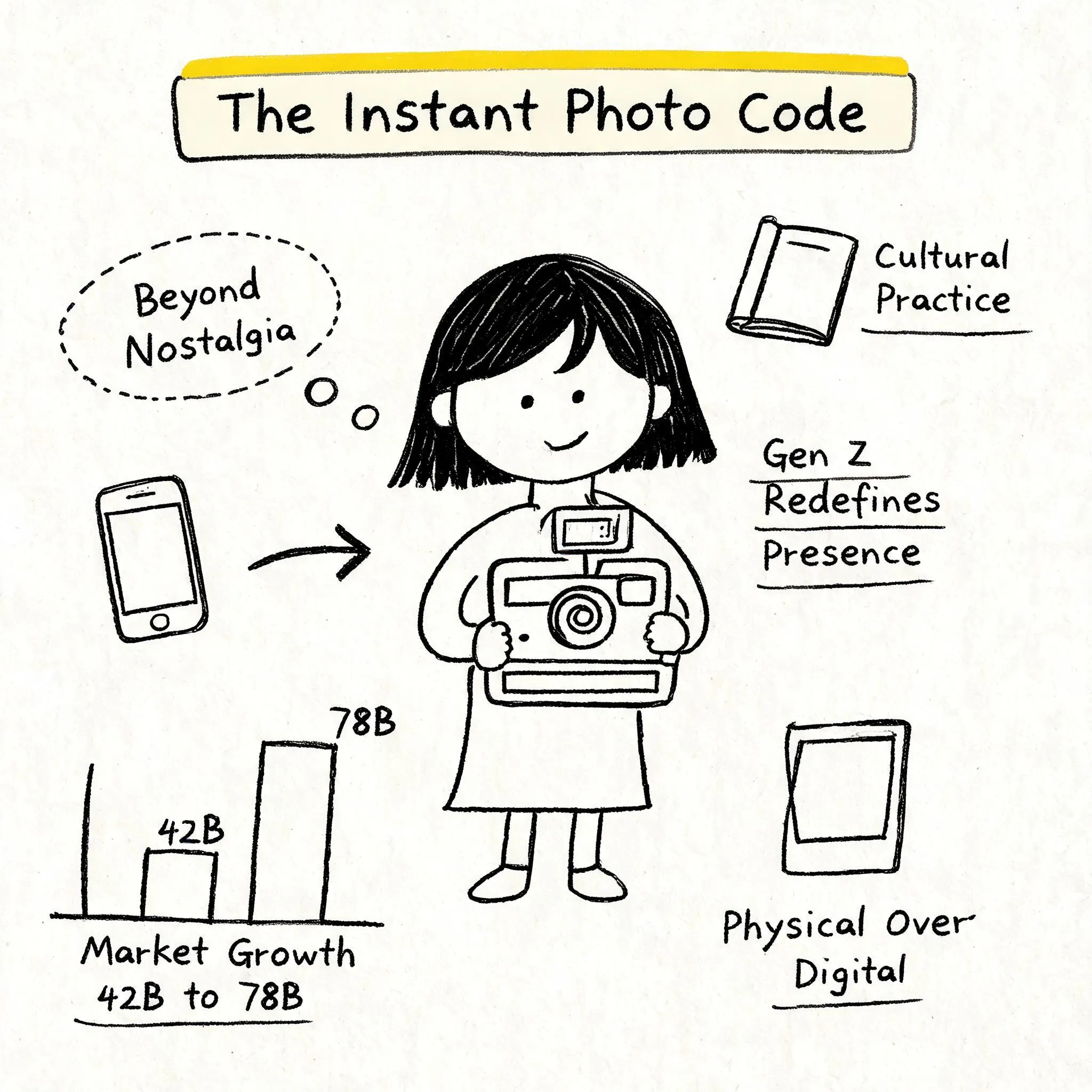
I. Irreproducibility: Why Instant Photos Feel More “Real” Than Digital Ones
In the digital age, the threshold for “authenticity” has been infinitely lowered. Filters, retouching, and burst-mode selection mean every “perfect” photo on social media could be the product of multiple digital manipulations. Instant photos, with their inherent physical properties and irreversible shooting process, offer a fundamentally different sense of “realness.”
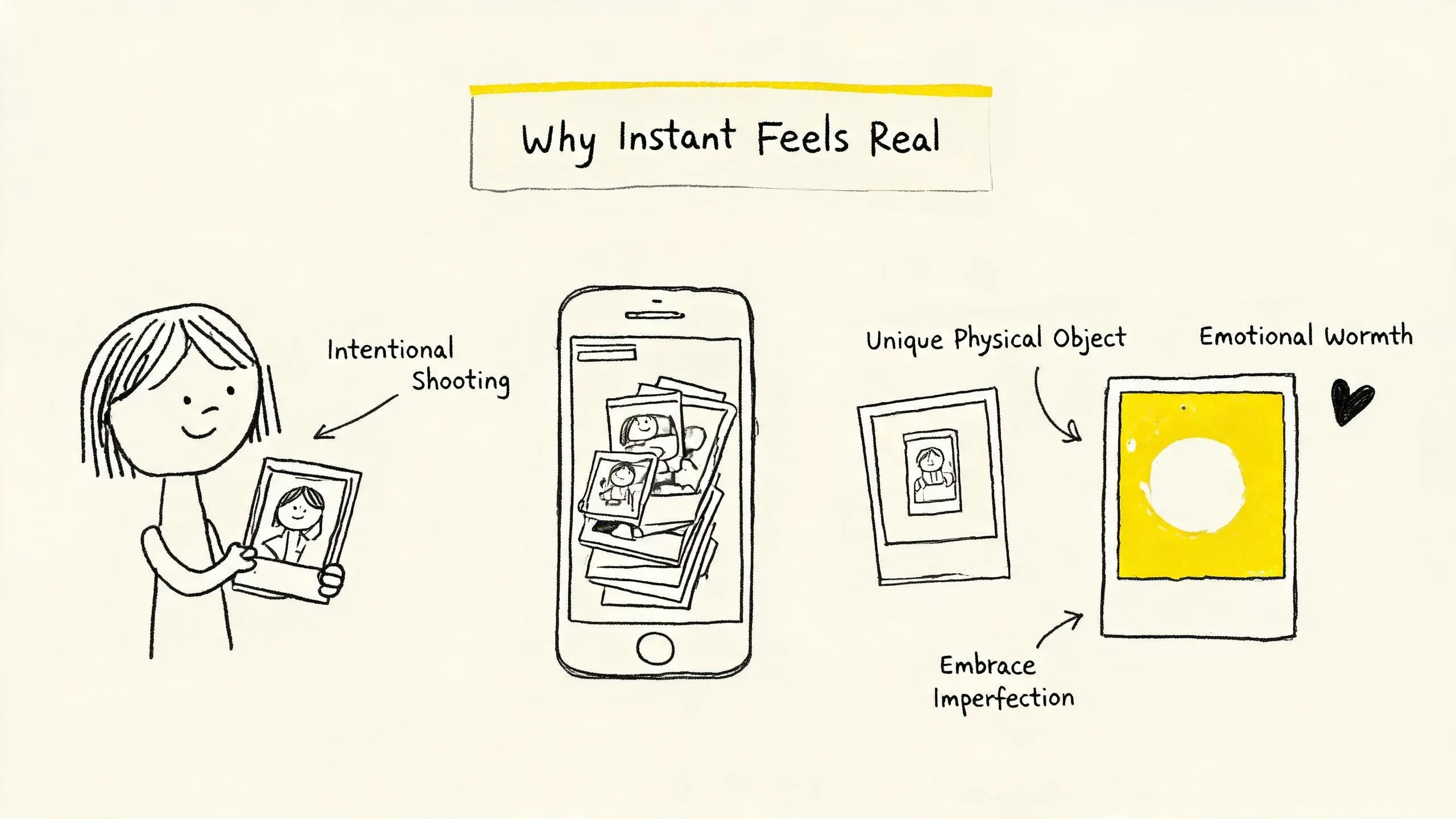
This authenticity stems first from their materiality and irreproducibility. A Polaroid photo is a unique physical object that “can be stuck on a wall, put in a wallet, placed on a fridge, or handed directly to someone.” This tangible presence stands in stark contrast to the thousands of digital files stored in the cloud or phone galleries . Every press of the shutter incurs the cost of film, forcing the photographer to think deliberately before acting, transforming “taking a photo” from an unconscious muscle memory into a conscious, intentional act.
Secondly, the “imperfections” of instant photos are precisely what constitute their core authenticity. Color casts, uneven exposure, and compositional accidents—features considered “flaws” in digital photography—become hallmarks of personal style and momentary uniqueness in the context of instant imaging. They cannot be erased with a click in post-processing software, faithfully recording the light, emotion, and chance of that specific moment, thereby carrying more personal feeling and emotional warmth than meticulously edited digital images . This embrace of “imperfection” is a gentle rebellion against the digital age’s over-pursuit of standardized, sterile perfection.
II. “Proof of Presence”: How Polaroids Become Identity Markers in Gatherings, Travel, and Social Rituals
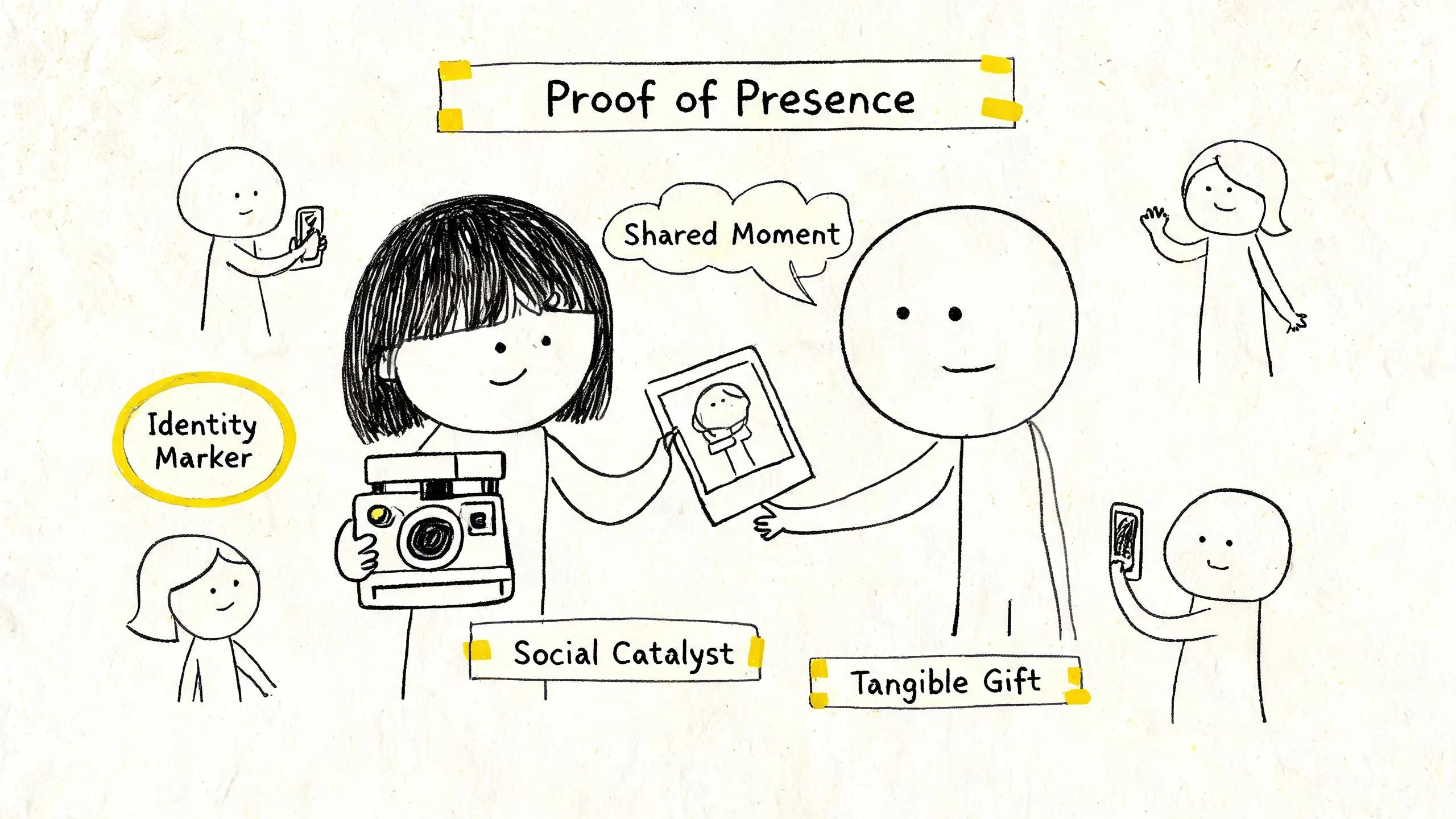
If irreproducibility gives instant photos their internal “truth,” their application in social scenarios externalizes this into a powerful “proof of presence.” For Gen Z digital natives who grew up with ubiquitous social media and digital photography, using analog and instant film offers a chance to “live in the moment,” rather than expending energy reviewing, posting, editing, and tracking likes and comments on a screen .
At gatherings, travels, or any significant social ritual, the Polaroid plays a role far beyond that of a recording tool. It is a social catalyst and an identity marker. When a Polaroid is brought out, it often attracts attention, sparking discussions about camera models, film choices, and even shooting techniques. This process itself creates a shared, offline interactive moment, pulling people’s attention away from their individual phone screens and back into a shared physical space.
The photos produced become instant social gifts or souvenirs. On a trip, giving a Polaroid photo to a fellow traveler or a local resident is a connection method with more emotional weight than digital sharing. At parties, Polaroid photos often become icebreakers and tangible witnesses to a joyful atmosphere. This act of converting digital interaction into physical exchange constructs an emotional economy based on concrete objects. As Polaroid directly stated in its 2026 brand narrative, this is a choice “when Gen Z craves to slow down” . Through this method, they mark their “presence” within the digital torrent, using it to build and reinforce their social identity and community belonging.
III. The Logic of Social Currency: From Swapping Film to Instagram’s Film Aesthetic
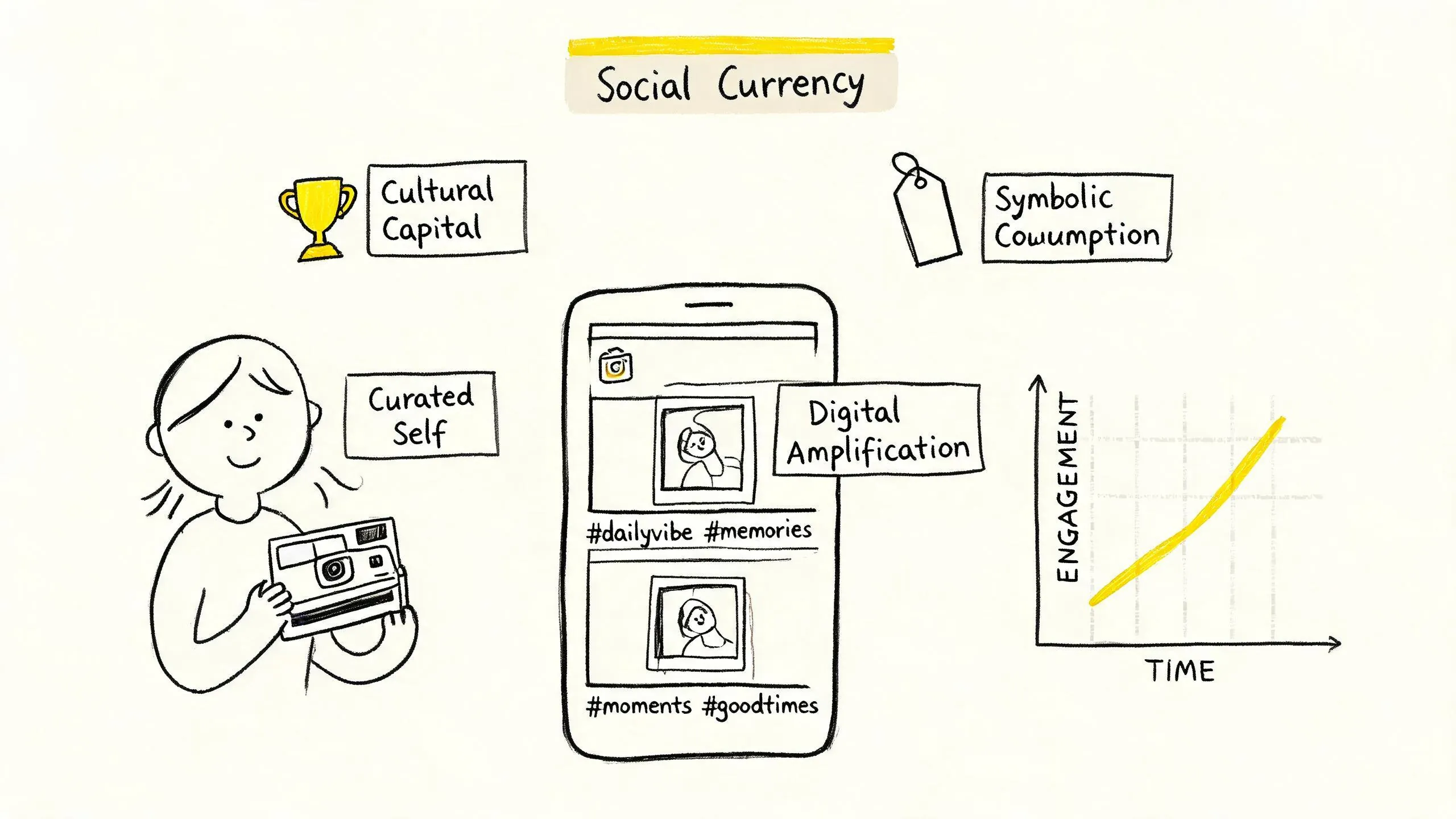
An interesting phenomenon is that this “anti-digital” practice deeply relies on the most cutting-edge digital platforms for dissemination and value amplification. On Instagram and TikTok, tags like #instax and #polaroid have accumulated hundreds of millions of posts, making digital platforms the largest stage for showcasing and discussing physical photography . People share scans of physical photos online, compare the imaging styles of different Polaroid models, and document the entire process from unboxing film to waiting for development.
This constitutes the complete operational logic of instant photos as “social currency.” First, owning and skillfully using a Polaroid is itself a symbol of cultural capital, implying the photographer has a unique aesthetic sense of life, is willing to pay for “experience” and “authenticity,” rather than merely pursuing efficiency . Second, by shooting and sharing physical photos, users craft an idealized self-image in digital spaces as someone who “understands slow living and values emotional connections.” This image can earn recognition and envy from specific communities, thus earning “social currency” .
On a deeper level, this is a form of symbolic consumption. Gen Z’s consumption behavior is highly symbolic. As a physical consumer good, the instant photo carries functions of emotional connection and value identification that transcend its use value . Retrospect founder Adam Fuerst’s observation is incisive: “High-tech devices make life perfect and sterile… Experience is becoming increasingly important to people, and experience is becoming more valuable, even if it’s inconvenient.” The time, money, and uncertainty invested in a Polaroid are precisely the value of this “inconvenient” experience. Through display on social media, it is transformed into a recognizable and enviable social symbol.
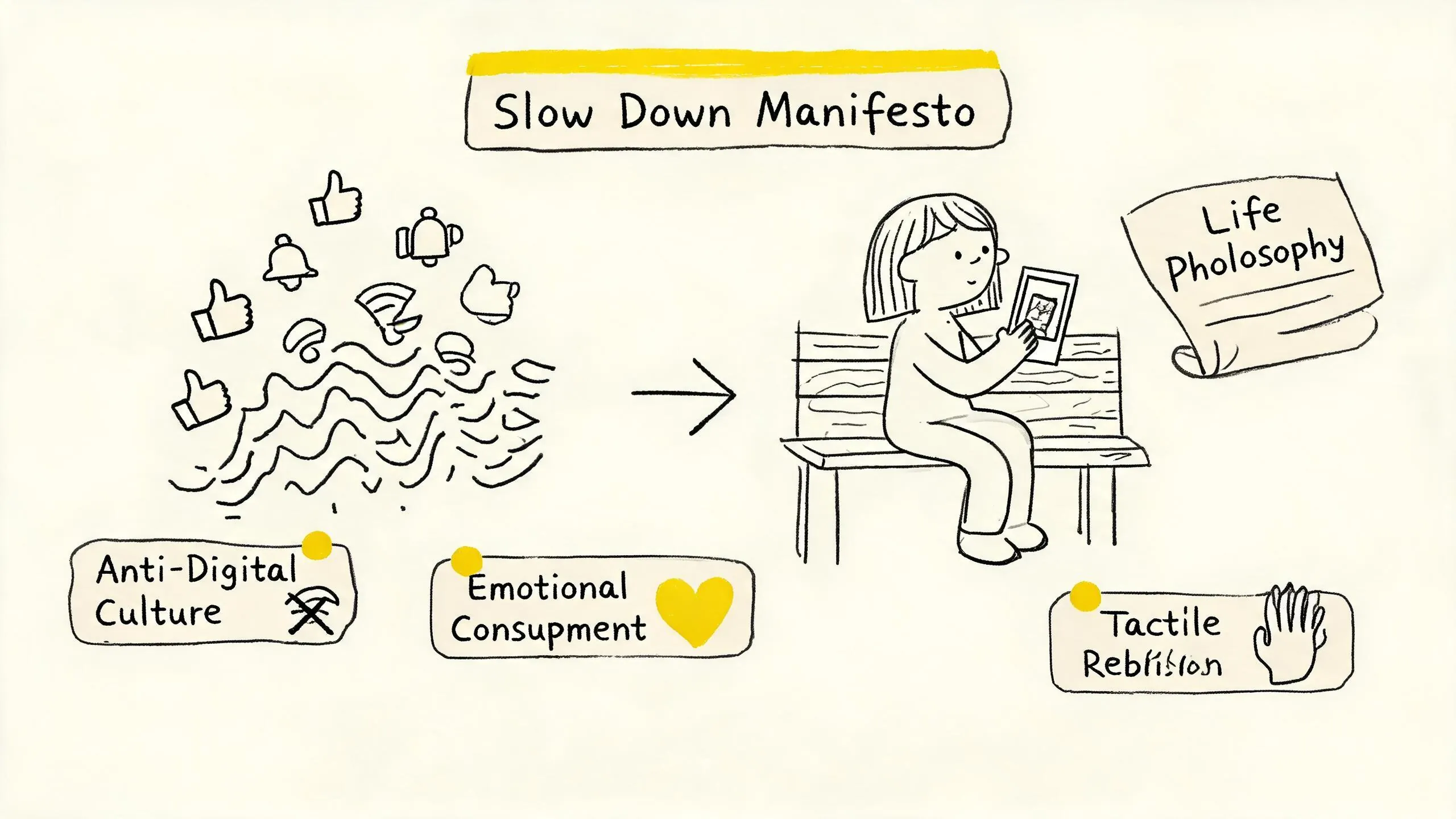
IV. Anti-Digital Counterculture: Gen Z’s “Slow Down” Manifesto and the Shift to Emotional Consumption
The revival of instant photography is by no means an accidental nostalgic trend, but a proactive cultural response from Gen Z to the dilemmas of digital existence. Research indicates that Gen Z’s fondness for instant cameras stems more from a “historical nostalgia”—they did not grow up in the golden age of instant cameras, but utilize a longing for technologies preceding their own era to improve and regulate their current digital lives . This is a strategic cultural appropriation.
Behind this lies a profound shift in emotional consumption. As material abundance reaches its peak and digital experiences become homogenized, young consumers are increasingly willing to pay for products that can spark joy, possess emotional narratives, and align with their own identity . Instant photos perfectly fit this need: they offer a tangible object (countering the intangible digital world), unpredictable results (countering the certainty controlled by algorithms), and a shared sense of ritual (countering atomized individual socializing) . Beth McGroarty, Research Director at the Global Wellness Institute, points out that this desire for physical objects stems from humanity’s innate need for touch since infancy, and is a “rebellion against the invisible, disembodied, disposable digital screen world” .
From a brand perspective, companies like Polaroid have keenly captured and reinforced this narrative. Their billboard slogan in Coney Island, “Dive in before the data center runs out of water,” directly binds the product to an eco-friendly, humanistic stance against excessive digitization . This is no longer just selling a camera, but peddling a life philosophy and set of values. Therefore, when Gen Z raises a Polaroid, they are not just taking a photo; they are making a gentle yet firm cultural statement: In the torrent of data, we choose to define our existence and connections through physical, slow, and imperfect moments.
Conclusion
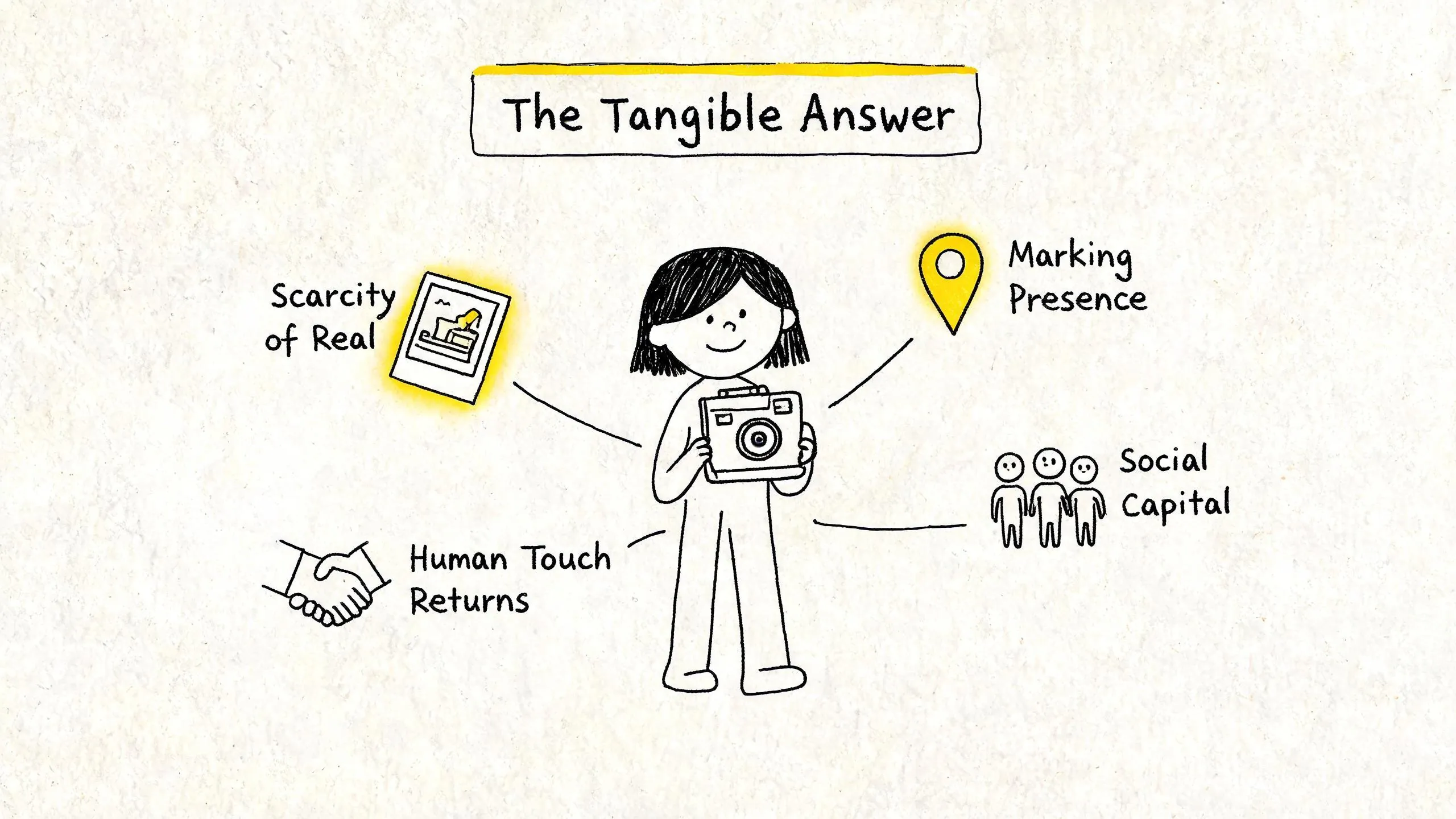
The story of Gen Z and Polaroids is far more complex than a simple “retro trend.” It is a multifaceted practice driven by technological characteristics (irreproducibility), social needs (proof of presence), and cultural psychology (anti-digital sentiment). Instant photos have become a scarce commodity in the digital age—a physical medium capable of carrying authentic emotions, marking physical presence, and being converted into social capital. In this sense, every click of the shutter and every moment spent waiting for development is a contemporary answer to fundamental questions like “What is real?” and “How do we connect?” It tells us that even in the most digital age, humanity’s desire for tangible warmth, unpredictable surprises, and face-to-face sharing has never disappeared. Instead, it is returning with greater intensity in new forms.
References
- Global Polaroid Market Research Report 2034
- Instant Print Camera Market Size, Share & Forecast to 2031
- Fujifilm Announces Financial Results for the 3rd Quarter Ended December 31, 2025
- Fujifilm Instax sales to exceed $1 billion
- From Polaroid to vinyl, Gen Z is making retro tech one of 2025’s biggest trends
- As Gen Z craves to slow down, Polaroid introduces the Go Generation 3
- The analog photography trend is about photography without “tracking likes and comments” — Fujifilm says
- The Resurgence of Instant Film: Why Instax and Polaroid Are Popular Again
- Gen Z Is Obsessed With $30 Digital Disposable Cameras — ShelfTrend
- From screens to print: Why Gen Z is embracing physical photos